Predictive Analytics in US Agriculture: Boosting Yields by 10-12%
Predictive analytics in US agriculture is poised to boost crop yields by 10-12% by Summer 2026, leveraging advanced data models to optimize planting, irrigation, and pest management for enhanced farm efficiency and sustainability.
Predictive analytics in US agriculture is poised to boost crop yields by 10-12% by Summer 2026, leveraging advanced data models to optimize planting, irrigation, and pest management for enhanced farm efficiency and sustainability.
The landscape of American farming is undergoing a profound transformation. By Summer 2026, the integration of predictive agriculture analytics is expected to elevate US crop yields by a significant 10-12%. This isn’t just about incremental improvements; it’s a paradigm shift driven by advanced data models that promise to redefine how food is grown across the nation, offering unprecedented precision and efficiency to farmers.
The dawn of data-driven farming
The agricultural sector has always been at the mercy of variables like weather, soil conditions, and pest outbreaks. However, the advent of predictive analytics is changing this dynamic, offering farmers a powerful tool to anticipate and mitigate these challenges before they escalate. This technological leap represents a new era where intuition is complemented, and often surpassed, by data-backed insights.
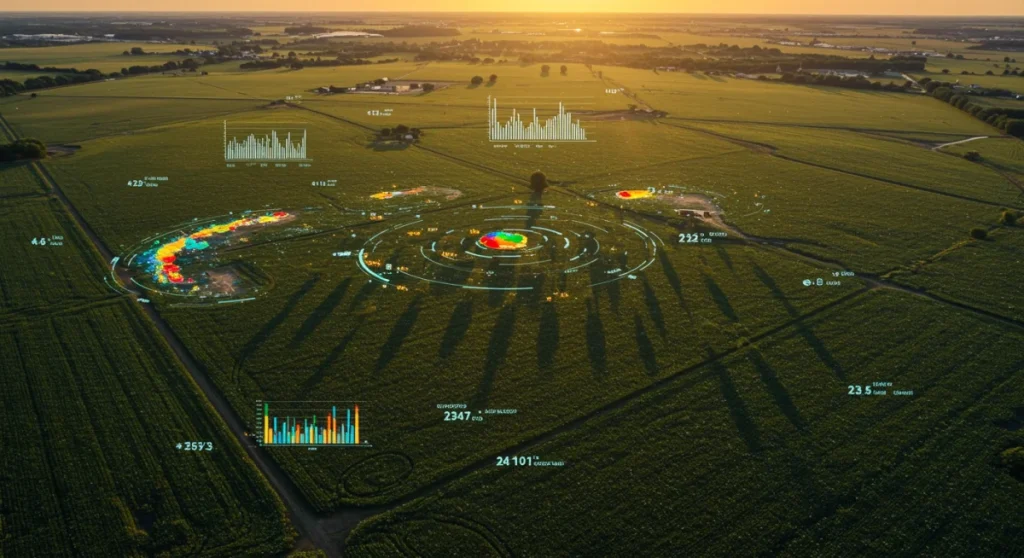
Predictive analytics in agriculture involves collecting vast amounts of data from various sources, including sensors, drones, satellite imagery, and historical weather patterns. This data is then processed and analyzed using sophisticated algorithms and machine learning models to forecast future outcomes. The goal is to provide actionable intelligence that helps farmers make more informed decisions, optimizing every stage of the crop cycle from planting to harvest.
Understanding the data ecosystem
Sensors: Soil moisture, nutrient levels, pH, and temperature are continuously monitored.
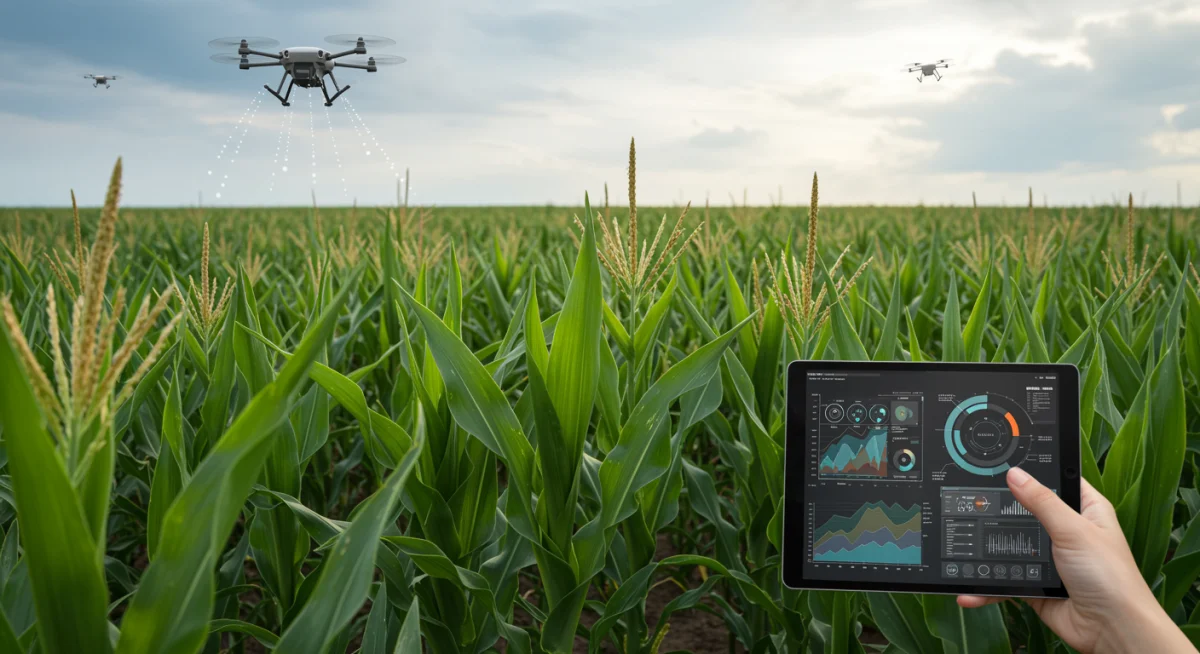
Drones and Satellite Imagery: Provide high-resolution views of crop health, identifying stressed areas or pest infestations early.
Weather Data: Historical and real-time forecasts inform planting schedules, irrigation needs, and disease risk.
Historical Yield Data: Past performance data helps refine models and predict future output more accurately.
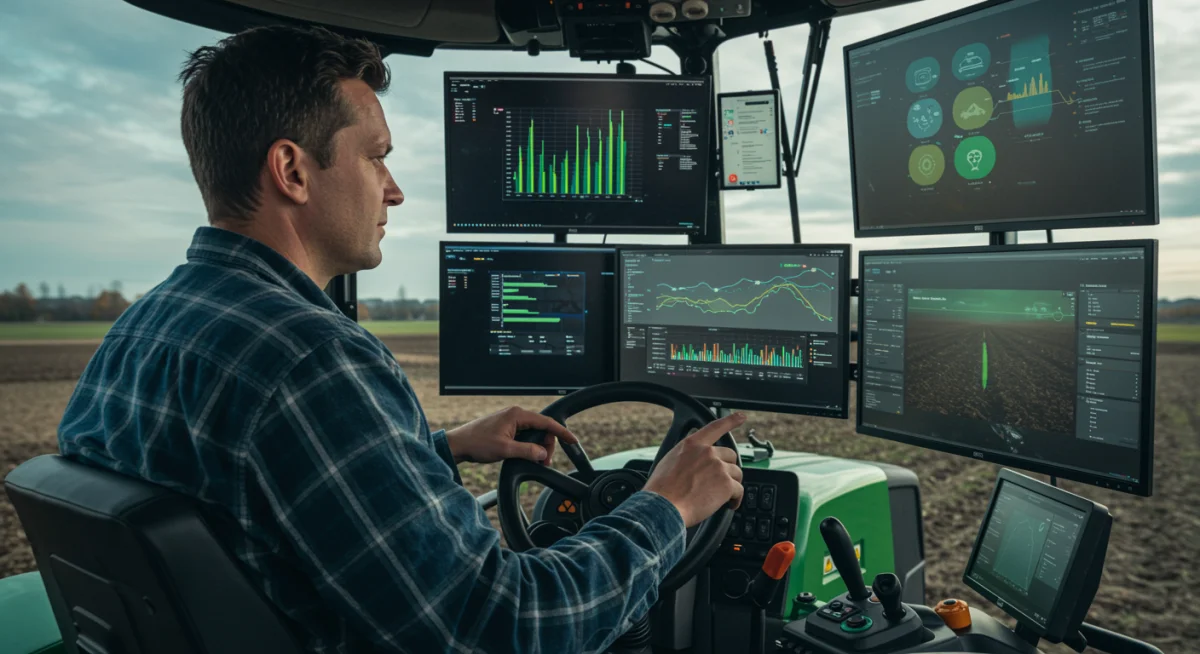
The integration of these diverse data streams creates a comprehensive picture of the farm environment. This holistic view allows predictive models to identify patterns and correlations that would be impossible for human observation alone. The result is a proactive approach to farm management, moving away from reactive problem-solving.
Ultimately, the promise of data-driven farming lies in its ability to enhance sustainability while boosting productivity. By using resources more efficiently, such as water and fertilizers, farmers can reduce their environmental footprint. This synergy between technology and ecological responsibility is a cornerstone of modern agriculture, ensuring both profitability and planetary health.
Advanced data models: the engine of precision
At the heart of the projected 10-12% yield increase are the advanced data models that power predictive analytics. These aren’t simple spreadsheets; they are complex algorithms capable of processing petabytes of information and identifying nuanced relationships between countless variables. Machine learning, artificial intelligence, and statistical modeling are the core components driving these insights.
These models can predict everything from optimal planting times based on long-range weather forecasts to the precise amount of fertilizer needed for specific soil types. They can even forecast the likelihood of disease outbreaks, enabling farmers to apply preventative measures rather than curative ones. This level of precision minimizes waste, reduces costs, and maximizes the health and productivity of crops.
Key types of models in action
Yield Prediction Models: Analyze historical data, weather, soil, and crop health to forecast harvest volumes.
Pest and Disease Prediction Models: Identify environmental conditions conducive to outbreaks, alerting farmers in advance.
Irrigation Optimization Models: Use soil moisture data, weather forecasts, and crop water needs to schedule precise irrigation.
Nutrient Management Models: Recommend optimal fertilizer application based on soil tests and crop growth stages.
The continuous learning capability of these models is particularly impactful. As more data is fed into the systems, the predictions become increasingly accurate and refined. This iterative process ensures that the models adapt to changing environmental conditions and agricultural practices, providing ever-improving guidance to farmers.
The development and deployment of these models require significant investment in technology and expertise. However, the return on investment, evidenced by increased yields and reduced operational costs, makes it an increasingly attractive proposition for farms of all sizes. The ability to forecast and adapt is becoming a critical competitive advantage in the agricultural sector.
Optimizing crop management with predictive insights
The practical application of predictive analytics manifests in optimized crop management strategies. Farmers are no longer guessing; they are making decisions backed by real-time data and future projections. This leads to more efficient use of resources, reduced environmental impact, and ultimately, healthier, more abundant crops.
From the moment seeds are planted to the final harvest, predictive insights guide every step. This includes deciding which crop varieties are best suited for specific soil conditions and climate predictions, determining the ideal spacing for plants to maximize sunlight and nutrient absorption, and timing irrigation precisely to meet plant needs without overwatering.
Strategic benefits across the crop lifecycle
Pre-planting: Selecting optimal seed varieties and planning planting dates based on long-term weather forecasts and soil analysis.
Early Growth: Monitoring seedling health, adjusting nutrient application, and identifying early signs of stress or disease.
Mid-Season: Fine-tuning irrigation schedules, managing pests and weeds proactively, and assessing crop progress.
Harvest: Predicting optimal harvest times for maximum yield and quality, and planning logistics efficiently.
The ability to intervene early and precisely is a game-changer. For example, if a predictive model indicates a higher risk of a fungal infection due to forecasted humidity and temperature, a farmer can apply a preventative treatment before the disease takes hold, saving the crop and reducing the need for more intensive, and costly, interventions later.
This level of detailed management not only boosts yields but also contributes to the overall resilience of farming operations. By minimizing risks and optimizing inputs, farms become more robust against environmental fluctuations and market volatility. It transforms farming into a more predictable and controllable enterprise.
Impact on US agriculture: economic and environmental
The projected 10-12% increase in crop yields through predictive analytics will have far-reaching implications for US agriculture, affecting both the economic viability of farms and the environmental sustainability of food production. This advancement is not merely a technological upgrade; it’s a strategic shift with profound societal benefits.
Economically, higher yields mean greater profitability for farmers, strengthening rural economies and ensuring the continued competitiveness of American agriculture in global markets. Reduced input costs, such as water, fertilizer, and pesticides, further enhance financial returns. This economic boost can translate into investments in new technologies, improved infrastructure, and better livelihoods for farming communities.
Key areas of impact
Increased Profitability: Higher yields with optimized input costs lead to greater farm income.
Resource Efficiency: Precise application of water and nutrients reduces waste and conserves natural resources.
Reduced Environmental Footprint: Less runoff of chemicals and more efficient land use contribute to ecological health.
Enhanced Food Security: Greater and more reliable crop production helps ensure a stable food supply for the nation.
Environmentally, the precision offered by predictive analytics is a significant step towards sustainable farming. By minimizing the overuse of water and agrochemicals, the technology helps protect soil health, prevent water pollution, and preserve biodiversity. This aligns with a growing global demand for environmentally responsible food production.
Furthermore, the ability to grow more food on the same amount of land reduces the pressure to convert natural habitats into agricultural fields. This land-sparing effect is crucial for biodiversity conservation and mitigating climate change. Predictive analytics thus emerges as a vital tool for achieving both agricultural productivity and ecological stewardship.
Challenges and the path forward
While the benefits of predictive analytics in US agriculture are clear, the path to widespread adoption is not without its challenges. Implementing these advanced systems requires significant investment, technical expertise, and a willingness to embrace new methodologies. Addressing these hurdles is crucial for realizing the full potential of data-driven farming.
One primary challenge is the initial cost of technology, including sensors, drones, software, and data infrastructure. Small and medium-sized farms, which form the backbone of American agriculture, may find these investments prohibitive. There’s also a need for skilled personnel who can manage and interpret the complex data generated by these systems.
Overcoming adoption barriers
Financial Incentives: Government subsidies and grants can help offset initial technology costs for farmers.
Education and Training: Programs to equip farmers with the digital literacy and analytical skills needed for data-driven farming.
Accessible Platforms: Developing user-friendly software and services that simplify data interpretation and decision-making.
Data Privacy and Security: Ensuring robust measures to protect sensitive farm data from cyber threats.
Another critical aspect is data interoperability. Different equipment and software systems often use proprietary formats, making it difficult to integrate data from various sources. Industry standards and open platforms are essential to create a seamless data ecosystem that benefits all stakeholders.
Despite these challenges, the trajectory towards data-driven agriculture is undeniable. Ongoing research and development are continually making these technologies more affordable and user-friendly. Collaboration between tech companies, agricultural institutions, and government bodies will be key to accelerating adoption and ensuring that the benefits of predictive analytics reach every corner of US agriculture.
The future of farming: smarter, stronger, sustainable
The vision of US agriculture by Summer 2026, with crop yields boosted by 10-12% through predictive analytics, paints a picture of a smarter, stronger, and more sustainable farming industry. This future is characterized by farms that are not only more productive but also more resilient and environmentally responsible. The integration of advanced data models is fundamentally reshaping the agricultural landscape.
This evolution extends beyond just yield increases. It encompasses a holistic improvement in farming practices, leading to better resource management, reduced waste, and a more predictable operational environment. The farmer of tomorrow will be empowered with unprecedented insights, turning vast amounts of data into actionable strategies that optimize every aspect of crop production.
Key pillars of future agriculture
Precision Resource Management: Water, nutrients, and pesticides applied exactly where and when needed.
Proactive Risk Mitigation: Anticipating and addressing threats like pests, diseases, and adverse weather before they cause significant damage.
Enhanced Decision-Making: Farmers equipped with data-backed insights for every operational choice.
Sustainable Practices: Reduced environmental impact through optimized resource use and minimized chemical runoff.
The long-term implications are profound. A more efficient and sustainable agricultural sector contributes directly to national economic stability, and environmental health. It ensures that the US remains a leader in agricultural innovation, capable of feeding its population and contributing to global food supplies in an increasingly resource-constrained world.
The journey towards this future is ongoing, marked by continuous innovation and adaptation. As predictive analytics technologies mature and become more accessible, their transformative power will become even more evident, cementing their role as an indispensable tool for the modern American farmer. The future of farming is indeed intelligent, integrated, and incredibly promising.
High initial costs, need for expertise, data interoperability.
Frequently asked questions about predictive agriculture analytics
What is predictive analytics in agriculture?▼
Predictive analytics in agriculture uses advanced data models, machine learning, and AI to forecast future farm outcomes. It analyzes data from sensors, drones, and weather patterns to optimize decisions regarding planting, irrigation, fertilization, and pest management, aiming to increase efficiency and crop yields.
How will predictive analytics boost US crop yields by 2026?▼
By Summer 2026, predictive analytics is projected to boost US crop yields by 10-12% by enabling more precise resource allocation, proactive risk management against pests and diseases, and optimized planting and harvesting schedules. This data-driven approach minimizes waste and maximizes crop health.
What types of data models are used in predictive agriculture?▼
Advanced data models include yield prediction models, pest and disease forecasting models, irrigation optimization models, and nutrient management models. These leverage machine learning and AI to process vast datasets, identifying patterns and making highly accurate, actionable predictions for farmers.
What are the economic benefits for US farmers?▼
For US farmers, predictive analytics offers increased profitability through higher yields and reduced operational costs. By optimizing inputs like water, fertilizer, and pesticides, it enhances economic viability, strengthens rural economies, and improves the competitiveness of American agriculture in global markets.
What challenges must be overcome for wider adoption?▼
Challenges include the high initial cost of technology, the need for specialized technical expertise, and issues with data interoperability between different systems. Overcoming these requires financial incentives, educational programs, user-friendly platforms, and robust data privacy measures.
Conclusion
The journey towards a future where predictive analytics is ingrained in every aspect of US agriculture is well underway. The promise of boosting crop yields by 10-12% by Summer 2026 is a testament to the transformative power of advanced data models. This technological revolution is not just about producing more food; it’s about cultivating it smarter, with greater precision, efficiency, and an unwavering commitment to sustainability. As challenges are met with innovation and collaboration, the American farmer stands poised to lead a new era of agricultural prosperity and environmental stewardship, ensuring a resilient and abundant food supply for generations to come.