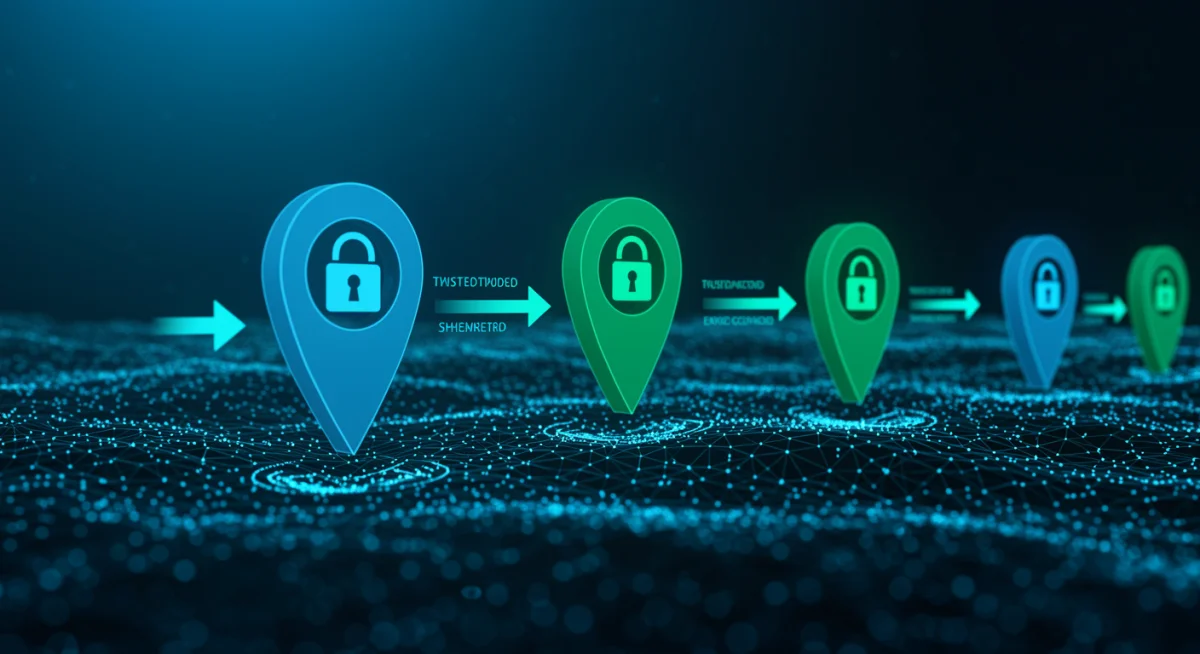
Cybersecurity Mesh Architecture: 2026 US Enterprise Blueprint
By 2026, cybersecurity mesh architecture will emerge as a critical blueprint for unified US enterprise security, significantly reducing breach risk by an estimated 30% through its distributed and adaptable security controls.
Cybersecurity mesh architecture is poised to become the foundational strategy for US enterprise security by 2026, consolidating disparate security tools into a cohesive framework that reduces breach risk by an estimated 30%.
In an increasingly interconnected digital landscape, the traditional perimeter-based security model is proving inadequate against sophisticated cyber threats. The emergence of cybersecurity mesh architecture represents a paradigm shift, offering US enterprises a robust and unified defense strategy projected to reduce breach risk by an estimated 30% by 2026. This innovative approach moves beyond isolated security products, weaving together a fabric of distributed controls and centralized management to safeguard critical assets wherever they reside.
Understanding the Cybersecurity Mesh Architecture Paradigm
The concept of cybersecurity mesh architecture (CSMA) is gaining significant traction as organizations grapple with the complexities of hybrid workforces, multi-cloud environments, and the proliferation of IoT devices. Traditional security models, often reliant on a single point of defense, struggle to protect an expanding and fragmented attack surface. CSMA addresses this by creating a modular, composable security approach.
Instead of a monolithic security stack, CSMA integrates various security services and tools into a distributed fabric, enabling more granular and consistent policy enforcement across diverse IT environments. This approach is not about replacing existing security solutions but rather orchestrating them more effectively. It allows security policies to follow the data and users, regardless of their location, providing a more agile and resilient defense.
The evolution from perimeter to mesh
For decades, enterprise security revolved around building strong perimeters to keep threats out. However, with cloud adoption and remote work, the perimeter has dissolved. CSMA acknowledges this new reality, focusing on protecting individual assets rather than the network edge. This shift is crucial for modern US enterprises.
Distributed Enforcement: Security policies are enforced closer to the assets they protect, whether they are in the cloud, on-premises, or at the edge.
Identity-Centric Security: Access is granted based on verified identities and context, rather than network location.
API-Driven Integration: Various security tools communicate and share intelligence through standardized APIs, creating a cohesive security ecosystem.
In essence, CSMA creates an adaptable security boundary around every entity, whether it’s a user, device, application, or data. This dynamic and flexible approach is vital for safeguarding the vast and varied digital assets that define the contemporary US enterprise. It moves beyond simply blocking threats to actively understanding and adapting to the threat landscape.
Key Components of a Robust Cybersecurity Mesh
Building an effective cybersecurity mesh architecture requires a strategic combination of technologies and processes. These components work in concert to provide a unified and adaptive security posture. Understanding each element is crucial for successful implementation within US enterprises.
At its core, the mesh relies on strong identity and access management (IAM) as its foundation. Without robust identity verification, the principle of distributed enforcement cannot be effectively realized. Beyond IAM, other vital elements contribute to the mesh’s strength and flexibility, creating a comprehensive defense strategy.
Pillars of the mesh: IAM, security analytics, and consolidated policy management
The success of a cybersecurity mesh hinges on several critical pillars that enable its distributed yet unified nature. These pillars ensure that security is not just present but intelligently applied and managed across the entire enterprise ecosystem. Without these foundational elements, the mesh would lack cohesion and effectiveness.
Identity and Access Management (IAM): This forms the control plane for the mesh, ensuring that only authenticated and authorized entities can access resources. It includes capabilities like multi-factor authentication (MFA), single sign-on (SSO), and adaptive access policies.
Security Analytics and Intelligence: Centralized threat intelligence platforms and security information and event management (SIEM) systems collect and analyze security data from all mesh components. This provides a holistic view of the security landscape and enables proactive threat detection.
Consolidated Policy and Posture Management: A centralized management plane allows security teams to define, manage, and enforce security policies consistently across all distributed security controls. This ensures uniformity and reduces configuration errors.
Distributed Security Controls: These are the individual security tools and services deployed across the IT environment, such as firewalls, intrusion detection/prevention systems (IDS/IPS), data loss prevention (DLP), and cloud access security brokers (CASB).
Each of these components plays a vital role in the mesh’s ability to adapt and protect. IAM establishes trust, analytics provide visibility, policy management ensures consistency, and distributed controls execute the protection. Together, they create a formidable defense against evolving cyber threats, making the enterprise more resilient.
Benefits for US Enterprises: Reducing Breach Risk by 30%
The adoption of cybersecurity mesh architecture offers tangible benefits for US enterprises, most notably a projected 30% reduction in breach risk by 2026. This significant improvement stems from the mesh’s inherent ability to provide more granular control, enhance visibility, and accelerate incident response across complex environments.
Traditional security models often leave gaps that attackers exploit, especially in hybrid or multi-cloud setups. CSMA closes these gaps by extending security enforcement uniformly. This leads to a more resilient and less vulnerable attack surface, directly contributing to the anticipated reduction in successful breaches and their costly consequences.
Enhanced security posture and operational efficiency
Beyond risk reduction, the mesh architecture brings about substantial improvements in an organization’s overall security posture and operational efficiency. By integrating disparate tools, it streamlines security operations and provides a clearer, more actionable view of potential threats. This integrated approach minimizes alert fatigue and allows security teams to focus on critical incidents.
Improved Threat Detection and Response: Centralized analytics and intelligence enable faster identification of threats and more coordinated responses across all security domains.
Consistent Policy Enforcement: Policies are applied uniformly, regardless of where data or users reside, eliminating inconsistencies that attackers often exploit.
Reduced Complexity: While conceptually advanced, the mesh simplifies management by providing a single pane of glass for policy orchestration, reducing the burden on security teams.
Greater Agility and Scalability: New security services can be easily integrated into the mesh, allowing enterprises to adapt quickly to emerging threats and evolving business needs without overhauling their entire security infrastructure.
The operational benefits extend to cost savings as well, as organizations can optimize their existing security investments rather than constantly purchasing new, standalone solutions. The unified approach fosters better collaboration among security teams and provides a more predictable security outcome, which is invaluable in today’s threat landscape. This comprehensive enhancement makes CSMA a strategic imperative for future-proof US enterprise security.
Implementing Cybersecurity Mesh: A Strategic Roadmap for 2026
Implementing a cybersecurity mesh architecture is not a trivial undertaking; it requires a phased and strategic approach. For US enterprises aiming to leverage this technology by 2026, a clear roadmap is essential. This involves assessing current capabilities, planning integrations, and fostering a culture of security.
The journey towards a full CSMA is iterative, starting with foundational elements and progressively integrating more advanced capabilities. It’s about building a robust framework that evolves with the enterprise’s digital footprint, ensuring that security remains agile and effective against a dynamic threat landscape.
Phased adoption and key considerations
A successful CSMA implementation typically begins with an audit of existing security tools and a clear definition of security objectives. Organizations should prioritize integrating critical components first, such as IAM and centralized policy management, before expanding to other areas. This allows for incremental progress and minimizes disruption.
Assess current security landscape: Identify existing security tools, their capabilities, and how they currently interact. Pinpoint gaps and areas for consolidation.
Prioritize foundational elements: Start by strengthening identity and access management, consolidating security analytics, and establishing a central policy engine.
Integrate gradually: Connect existing security services into the mesh using APIs, focusing on interoperability and data sharing.
Develop a unified security policy: Create consistent security policies that can be enforced across all mesh components, ensuring uniform protection.
Train security teams: Equip security personnel with the skills to manage and operate a distributed security architecture, emphasizing collaboration and automation.
Key considerations also include vendor selection, ensuring that chosen solutions support open standards and API-driven integration. Organizations should look for platforms that offer flexibility and scalability to accommodate future growth and evolving threat vectors. A strong focus on automation and orchestration will further enhance the mesh’s effectiveness, reducing manual effort and speeding up response times.
Challenges and Overcoming Obstacles in Mesh Adoption
While the benefits of cybersecurity mesh architecture are compelling, its adoption is not without challenges. US enterprises must anticipate and strategically overcome these obstacles to realize the full potential of this advanced security model. Addressing these issues proactively is key to a smooth transition and successful implementation.
One of the primary hurdles is the inherent complexity of integrating diverse security tools from multiple vendors. This requires a significant investment in planning, technical expertise, and potentially new skill sets within the IT and security teams. However, the long-term gains in security posture and efficiency far outweigh these initial difficulties.
Navigating complexity and ensuring interoperability
The distributed nature of CSMA, while a strength, can also present integration challenges. Ensuring that all security components communicate effectively and share relevant data is critical. Without seamless interoperability, the mesh cannot function as a unified defense system, potentially creating new security gaps.
Vendor Sprawl: Enterprises often have a multitude of security products from different vendors. Integrating these into a cohesive mesh requires significant effort and robust API support from each vendor.
Skill Gap: Managing a CSMA requires a deep understanding of distributed systems, cloud security, and API integrations, which may necessitate upskilling existing staff or hiring new talent.
Policy Consistency: Maintaining consistent security policies across a diverse and distributed environment can be challenging without a centralized management plane and automation.
Data Overload: The mesh generates vast amounts of security data. Effective analytics and AI-driven insights are crucial to avoid alert fatigue and identify genuine threats.
Overcoming these challenges involves a clear architectural vision, strong vendor partnerships, and a commitment to continuous improvement. Investing in orchestration and automation tools can significantly reduce the manual burden of managing the mesh. Furthermore, adopting a security culture that embraces collaboration and shared responsibility across different departments can help smooth the transition and ensure long-term success of the cybersecurity mesh architecture.
The Future Landscape: Cybersecurity Mesh in 2026 and Beyond
Looking ahead to 2026 and beyond, cybersecurity mesh architecture is poised to become the de facto standard for enterprise security in the United States. Its adaptability and resilience are perfectly suited to the ever-evolving threat landscape and the increasing complexity of modern IT environments. The mesh will continue to evolve, incorporating new technologies and adapting to future challenges.
The focus will shift even more towards predictive security and autonomous response, powered by advanced AI and machine learning. As organizations embrace even more distributed models, from edge computing to quantum cryptography, the mesh framework will provide the necessary flexibility to integrate and secure these innovations seamlessly. The goal is to move from reactive defense to proactive threat anticipation.
AI, automation, and the autonomous mesh
The integration of artificial intelligence (AI) and machine learning (ML) will be central to the continued evolution of cybersecurity mesh architecture. These technologies will enable the mesh to analyze vast datasets, identify subtle patterns of attack, and automate responses at machine speed, far beyond human capabilities. This will transform the mesh into a truly intelligent and adaptive defense system.
Predictive Threat Intelligence: AI will analyze global threat data to predict emerging attack vectors and proactively adjust security policies within the mesh.
Automated Policy Enforcement: ML algorithms will learn user and system behaviors, automatically adapting access controls and security configurations to maintain optimal posture.
Self-Healing Security: The mesh will gain the ability to autonomously detect and remediate vulnerabilities, isolate compromised assets, and restore secure operations with minimal human intervention.
Integrated Risk Management: AI will provide real-time risk assessments across the entire mesh, allowing enterprises to make data-driven decisions about resource allocation and security investments.
By 2026, we anticipate seeing more mature implementations of autonomous mesh capabilities, where security operations become less about manual intervention and more about overseeing intelligent, self-optimizing systems. This will free up security professionals to focus on strategic initiatives and complex threat hunting, ultimately creating a more secure and efficient digital ecosystem for US enterprises. The mesh is not just a technology; it’s a strategic philosophy for future-proofing security.
Regulatory Compliance and Trust in a Mesh Environment
For US enterprises, navigating the complex web of regulatory compliance is a constant challenge. Cybersecurity mesh architecture, with its centralized policy management and granular control, offers significant advantages in meeting these stringent requirements. By providing comprehensive visibility and consistent enforcement, the mesh can streamline compliance efforts and build greater trust among stakeholders.
Compliance frameworks like HIPAA, GDPR, CCPA, and various industry-specific regulations demand robust data protection and access controls. The distributed nature of the mesh allows for precise application of these controls, ensuring that sensitive data is protected wherever it resides, whether in the cloud, on-premises, or at the edge. This capability is paramount for maintaining legal and ethical standards.
Ensuring data privacy and meeting industry standards
The ability of CSMA to enforce policies consistently across different environments is particularly beneficial for data privacy. It ensures that data handling practices align with regulatory mandates, reducing the risk of non-compliance and associated penalties. Furthermore, the detailed logging and auditing capabilities inherent in a mesh architecture provide the necessary evidence for compliance reporting.
Granular Data Protection: The mesh enables micro-segmentation and fine-grained access controls, ensuring that only authorized individuals and systems can access sensitive data, fulfilling privacy requirements.
Centralized Audit Trails: All security events and policy enforcements are logged and aggregated, providing a comprehensive audit trail essential for demonstrating compliance to auditors.
Consistent Policy Application: Regulatory policies can be translated into unified security policies and applied consistently across the entire distributed IT landscape, eliminating discrepancies.
Incident Response Reporting: In the event of a breach, the mesh’s ability to quickly identify the scope and affected data simplifies incident reporting and notification processes, which are critical for regulatory adherence.
Building trust is not just about avoiding penalties; it’s about demonstrating a genuine commitment to protecting customer and corporate data. A well-implemented cybersecurity mesh architecture provides the transparency and control necessary to build this trust, enhancing an enterprise’s reputation and fostering stronger relationships with its clients and partners. This makes it an indispensable tool for regulatory navigation and trust building in the digital age.
Key Aspect
Brief Description
Unified Security
Integrates diverse security tools into a cohesive, distributed framework for consistent protection.
Breach Risk Reduction
Projected to lower enterprise breach risk by an estimated 30% by 2026 through granular controls.
Key Components
Relies on IAM, security analytics, and consolidated policy management for effectiveness.
Future Evolution
Will increasingly incorporate AI and automation for predictive and autonomous security operations.
Frequently Asked Questions About Cybersecurity Mesh
What is cybersecurity mesh architecture?▼
Cybersecurity mesh architecture (CSMA) is a modern security approach that integrates various security tools into a distributed, interoperable fabric. It provides consistent security policies and enforcement across diverse IT environments, moving beyond traditional perimeter-based defenses to protect individual assets.
How does CSMA reduce breach risk for US enterprises?▼
CSMA reduces breach risk by an estimated 30% by offering more granular control, consistent policy enforcement across distributed assets, and enhanced visibility. It closes security gaps found in traditional models, leading to faster threat detection and more effective incident response across complex digital landscapes.
What are the core components of a cybersecurity mesh?▼
The core components include Identity and Access Management (IAM), security analytics and intelligence platforms, a consolidated policy and posture management system, and various distributed security controls like firewalls and DLP. These work together to create a unified and adaptive defense.
Is implementing CSMA challenging for organizations?▼
Yes, implementing CSMA can be challenging due to integrating diverse vendor tools, potential skill gaps in security teams, and maintaining policy consistency across distributed environments. However, a phased approach, strong vendor partnerships, and automation can help overcome these obstacles effectively.
How will AI impact cybersecurity mesh architecture by 2026?▼
By 2026, AI and machine learning will significantly enhance CSMA by enabling predictive threat intelligence, automated policy enforcement, and self-healing security capabilities. This will transform the mesh into a more intelligent, adaptive, and autonomous defense system, reducing manual intervention and speeding up response times.
Conclusion
The digital world continues to expand and evolve, bringing with it an increasing array of cyber threats that demand a more sophisticated and adaptable defense. Cybersecurity mesh architecture is not merely an incremental upgrade but a fundamental re-imagining of how US enterprises will secure their assets by 2026. By unifying disparate security tools, enabling consistent policy enforcement, and leveraging advanced analytics, CSMA offers a clear path to significantly reduce breach risk and enhance overall security posture. While the journey to full implementation presents its complexities, the long-term benefits of a more resilient, agile, and intelligent security framework make it an indispensable strategy for any forward-thinking organization. Embracing this architectural shift is crucial for safeguarding the future of enterprise security in an interconnected world.