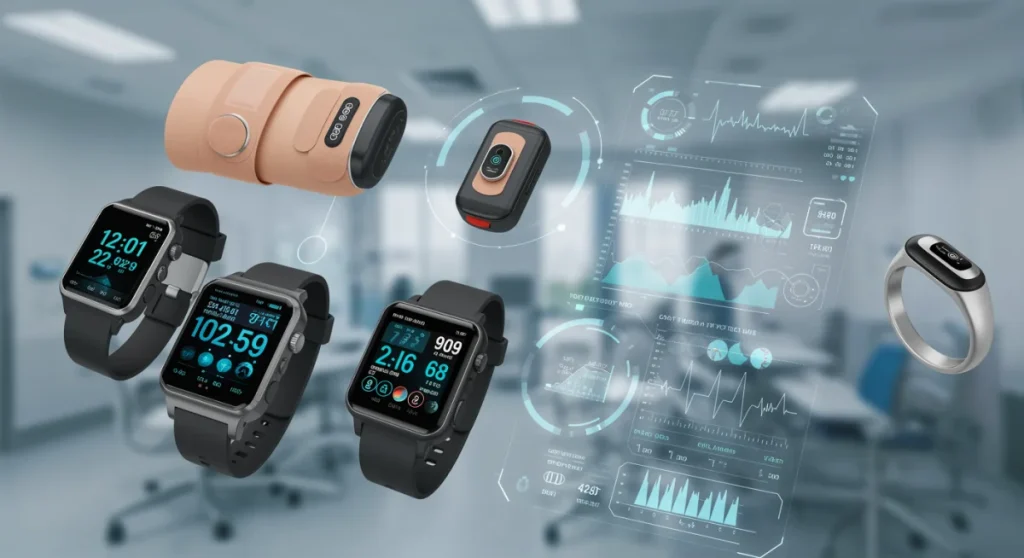
Wearable Tech in US Healthcare: 5 Vital Metrics by 2026
Wearable technology in US healthcare is rapidly advancing, enabling precise monitoring of five vital health metrics with an anticipated 95% accuracy by 2026, revolutionizing patient care and preventive medicine.
Wearable technology in US healthcare is rapidly advancing, enabling precise monitoring of five vital health metrics with an anticipated 95% accuracy by 2026, revolutionizing patient care and preventive medicine.
The landscape of modern medicine is undergoing a profound transformation, and at the forefront of this revolution is wearable tech in US healthcare. These innovative devices are not just gadgets; they are becoming indispensable tools for monitoring crucial aspects of our health, promising an unprecedented level of accuracy and personalized care. By 2026, experts predict these technologies will reliably track five vital health metrics with an astounding 95% accuracy, fundamentally reshaping how we approach wellness and disease management.
The Dawn of Digital Health Monitoring
The integration of wearable technology into everyday life has been swift, but its impact on healthcare is truly groundbreaking. From fitness trackers to advanced medical sensors, these devices offer a continuous stream of personal health data, moving beyond episodic doctor visits to a proactive, always-on monitoring system. This shift empowers individuals to take a more active role in their health while providing clinicians with invaluable insights.
Early iterations of wearable health devices primarily focused on basic activity tracking. However, rapid advancements in sensor technology, data processing, and artificial intelligence have propelled them into sophisticated medical instruments. These devices are now capable of collecting a diverse range of physiological data, offering a comprehensive view of a user’s health status in real-time.
From Fitness Trackers to Medical-Grade Devices
The journey of wearables from simple pedometers to clinically relevant tools highlights a significant evolution in design and functionality. Initially, consumer-grade devices were primarily for wellness enthusiasts, but their potential for medical applications quickly became apparent. Today, the lines are blurring between consumer and medical-grade wearables, with many devices seeking FDA clearance for specific health functions.
Sleep Analysis: Stages of sleep, duration, disturbances.
Heart Rate Monitoring: Continuous or on-demand readings.
ECG Capabilities: Detecting atrial fibrillation and other arrhythmias.
This evolution underscores a broader trend towards preventative care and early disease detection, offering a less intrusive and more consistent method of monitoring health. The ability to passively collect data throughout the day and night provides a more accurate representation of a person’s health baseline and deviations from it, which can be critical for timely interventions.
The promise of digital health monitoring extends beyond individual users. It offers healthcare providers a new paradigm for managing chronic conditions, reducing hospital readmissions, and delivering personalized care plans. The sheer volume and granularity of data generated by these devices present both opportunities and challenges, requiring robust data management and analytical capabilities.
Key Vital Health Metrics Under Surveillance
By 2026, wearable technologies are poised to achieve 95% accuracy in monitoring at least five critical vital health metrics, transforming diagnostic and preventive care. This precision will enable earlier detection of anomalies and more effective management of health conditions. Understanding these metrics and how wearables are improving their capture is essential to grasp the future of healthcare.
The focus on these specific metrics is driven by their direct correlation with overall health and their potential to indicate underlying issues. Accurate, continuous monitoring can provide early warning signs, allowing for proactive medical intervention rather than reactive treatment.
Heart Rate and Electrocardiogram (ECG)
Heart rate monitoring has been a staple of wearables for years, but the integration of medical-grade ECG capabilities marks a significant leap. Devices can now detect irregularities such as atrial fibrillation, a common heart rhythm disorder, often before symptoms become noticeable.
Continuous Heart Rate: Tracking beats per minute throughout the day for baseline assessment.
Resting Heart Rate: A key indicator of cardiovascular fitness and overall health.
On-Demand ECG: Single-lead ECGs capable of identifying specific cardiac arrhythmias.
Heart Rate Variability (HRV): An indicator of autonomic nervous system function and stress levels.
The ability to capture ECG data outside of a clinical setting empowers individuals and their doctors with critical information, potentially preventing strokes and other serious cardiac events. The accuracy of these measurements is continually improving, making them increasingly reliable for clinical decisions.
Blood Oxygen Saturation (SpO2)
Monitoring blood oxygen levels has become particularly relevant, especially in the context of respiratory illnesses and sleep disorders. Wearables equipped with pulse oximetry sensors can non-invasively measure SpO2, providing insights into respiratory function and sleep quality.
Low SpO2 levels can indicate conditions like sleep apnea or chronic obstructive pulmonary disease (COPD). Continuous monitoring during sleep can help identify these issues, leading to earlier diagnosis and treatment. The convenience of at-home SpO2 tracking reduces the need for specialized equipment and clinical visits.
Body Temperature
While historically challenging to measure accurately on the skin, advancements in sensor technology are making continuous body temperature monitoring a reality. This metric is crucial for detecting fevers, tracking menstrual cycles, and identifying inflammatory responses.
Blood Pressure
Non-invasive, continuous blood pressure monitoring via wearables remains a significant challenge, but rapid progress is being made. Traditional cuffs are cumbersome, and wearables offer the promise of effortless, regular readings, which is vital for managing hypertension.
Glucose Levels (Non-Invasive)
Perhaps one of the most anticipated breakthroughs, non-invasive glucose monitoring is a holy grail for diabetes management. Current methods often involve painful finger pricks or implanted sensors. Wearables aiming for non-invasive glucose tracking would revolutionize the lives of millions.
The collective accuracy of these five metrics will empower both patients and healthcare providers with an unprecedented level of insight, fostering a more proactive and personalized approach to health and wellness.
Technological Advancements Driving Accuracy
The projected 95% accuracy of wearable tech in US healthcare by 2026 isn’t a mere aspiration; it’s a realistic outcome driven by relentless innovation. Breakthroughs in sensor design, data processing, and artificial intelligence are converging to elevate the reliability and clinical utility of these devices.
Impact on Preventive Care and Chronic Disease Management
The advent of highly accurate wearable tech in US healthcare promises a paradigm shift from reactive treatment to proactive prevention and personalized chronic disease management.
Challenges and Ethical Considerations
While the promise of highly accurate wearable tech in US healthcare is immense, its widespread adoption and integration are not without significant challenges and ethical considerations.
The Future Landscape: Integration and Personalization
Looking beyond 2026, the trajectory for wearable tech in US healthcare points towards deeper integration with existing health systems and an unparalleled degree of personalization.
Regulatory Landscape and Adoption in the US
The regulatory environment plays a pivotal role in shaping the adoption and impact of wearable tech in US healthcare.
Economic Impact and Healthcare Cost Reduction
The economic implications of highly accurate wearable tech in US healthcare are profound, extending beyond individual patient benefits to significant healthcare cost reductions.
Key Aspect
Brief Description
Accuracy by 2026
Wearables projected to monitor 5 vital metrics with 95% accuracy.
Key Metrics Tracked
Heart rate/ECG, SpO2, body temperature, blood pressure, non-invasive glucose.
Impact on Healthcare
Enables proactive prevention, remote patient monitoring, and personalized care.
Challenges Ahead
Data privacy, regulatory hurdles, accessibility, and potential for misinterpretation.
Frequently Asked Questions About Wearable Tech in US Healthcare
What are the five vital health metrics wearables will monitor with 95% accuracy by 2026?▼
How does wearable tech improve preventive care?▼
What are the main challenges for widespread adoption of wearables in US healthcare?▼
How will AI and machine learning contribute to wearable accuracy?▼
What is the economic impact of wearable tech on US healthcare costs?▼
Conclusion
The evolution of wearable tech in US healthcare is rapidly moving towards a future where precise, continuous monitoring of vital health metrics will be the norm, not the exception.