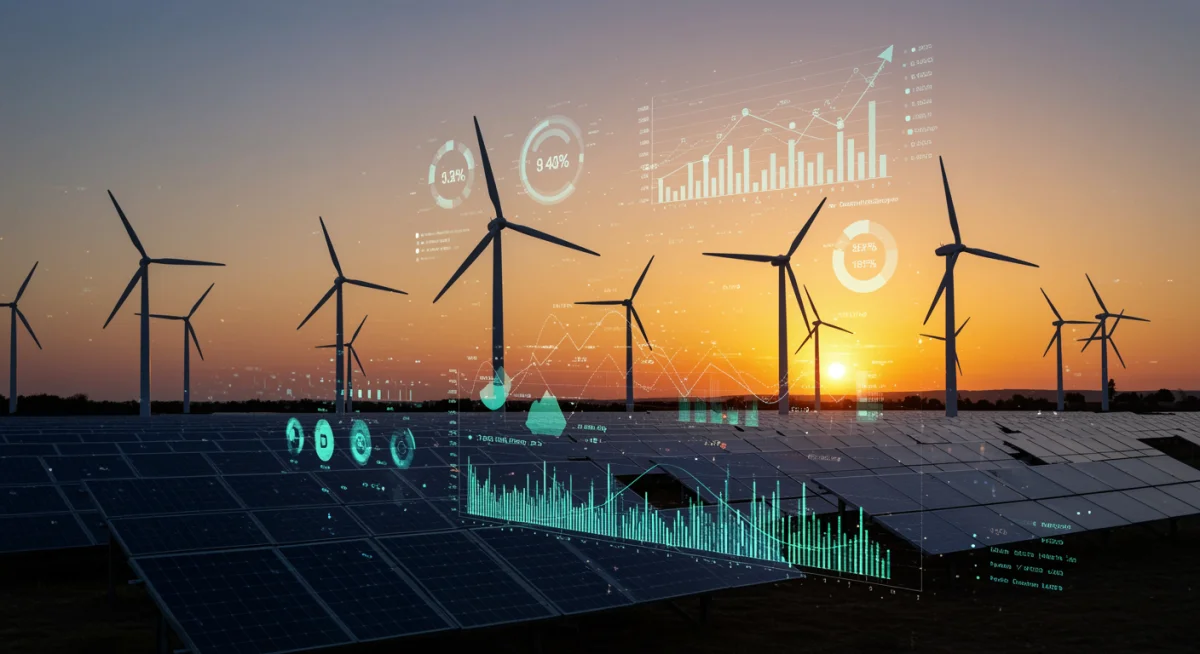
Investment Trends for 2026: Data-Driven Market Analysis
This article provides a data-driven analysis of key investment trends anticipated for 2026, offering insights into market performance, emerging opportunities, and strategic considerations for investors.
A comprehensive analysis of investment trends for 2026 reveals a landscape shaped by technological innovation, sustainable practices, and evolving global economic dynamics, presenting both challenges and significant opportunities for discerning investors.
As we approach 2026, the financial landscape continues its rapid evolution, influenced by technological advancements, shifting geopolitical dynamics, and a growing emphasis on sustainability. Understanding the key investment trends for 2026 is paramount for investors seeking to optimize their portfolios and identify lucrative opportunities in an increasingly complex global economy.
The Digital Transformation Imperative: AI and Automation
The relentless march of digital transformation continues to redefine industries and investment horizons. Artificial intelligence (AI) and automation are not just buzzwords; they are fundamental drivers of productivity, innovation, and, consequently, investment growth. Companies integrating these technologies effectively are poised for significant competitive advantages, making them attractive targets for forward-thinking investors.
The impact of AI stretches across various sectors, from healthcare to manufacturing, fundamentally altering operational efficiencies and creating new markets. Investors are increasingly scrutinizing companies’ AI strategies and patent portfolios as indicators of future success. The ability to leverage AI for predictive analytics, personalized services, and autonomous operations will distinguish market leaders from laggards.
AI’s Sectoral Impact and Investment Opportunities
AI’s influence is pervasive, creating distinct investment avenues across multiple sectors. Identifying companies at the forefront of AI development and adoption is crucial for capitalizing on this trend.
Healthcare Technology: AI-driven diagnostics, drug discovery, and personalized medicine are revolutionizing patient care and creating substantial growth potential.
Financial Services: AI enhances fraud detection, algorithmic trading, and customer service, improving efficiency and profitability.
Manufacturing and Logistics: Automation and AI optimize supply chains, reduce operational costs, and increase production capabilities.
Cybersecurity: AI is essential for advanced threat detection and prevention, a critical need in an increasingly digital world.
Investing in companies that are not only developing AI but also successfully integrating it into their core business models offers a robust pathway to long-term returns. The data overwhelmingly suggests that firms with strong AI capabilities are outperforming their peers in terms of market capitalization and innovation.
Sustainable Investing and ESG Factors
Environmental, Social, and Governance (ESG) factors have transitioned from niche considerations to mainstream investment criteria. Investors are increasingly aware of the long-term risks and opportunities associated with climate change, social inequality, and corporate governance. Companies demonstrating strong ESG performance are often viewed as more resilient, innovative, and ethically sound, attracting a growing pool of capital.
The push for sustainability is driven by regulatory pressures, consumer demand, and a growing understanding of systemic risks. This trend is particularly pronounced in sectors like renewable energy, clean technology, and sustainable agriculture. Investment funds and financial products that explicitly incorporate ESG criteria are experiencing significant inflows, reflecting a broader societal shift towards responsible capitalism.
Key Pillars of ESG Investment Growth
Understanding the specific components of ESG helps investors identify companies genuinely committed to sustainability, moving beyond mere greenwashing.
Environmental Stewardship: Focus on carbon footprint reduction, renewable energy adoption, water management, and pollution control.
Social Responsibility: Emphasis on fair labor practices, diversity and inclusion, community engagement, and product safety.
Robust Governance: Strong board independence, executive compensation alignment, transparency, and ethical business conduct.
Data indicates that companies with high ESG scores often exhibit lower volatility, better operational performance, and higher profitability over the long term. This correlation is not accidental but reflects sound management practices and a proactive approach to future challenges. The continued growth of sustainable finance will be a defining feature of investment strategies in 2026.
The Resurgence of Emerging Markets
While developed markets often dominate financial headlines, emerging markets present compelling growth opportunities, particularly as global economic recovery solidifies. Countries in Asia, Latin America, and parts of Africa are characterized by younger populations, growing middle classes, and expanding technological infrastructure. These demographics and economic shifts create fertile ground for investment in consumer goods, technology, and infrastructure development.
However, investing in emerging markets comes with its own set of considerations, including geopolitical risks, currency fluctuations, and regulatory uncertainties. A data-driven approach, carefully analyzing macroeconomic indicators, political stability, and specific industry trends, is essential for mitigating these risks and unlocking potential rewards. Diversification across different emerging economies can also help manage exposure.
Factors Driving Emerging Market Appeal
Several underlying factors contribute to the increasing attractiveness of emerging markets for global investors, making them a significant part of investment trends for 2026.
Demographic Dividends: Young, growing populations provide a robust labor force and expanding consumer bases.
Technological Leapfrogging: Many emerging economies are adopting cutting-edge technologies directly, bypassing older infrastructure.
Infrastructure Development: Massive investments in transportation, energy, and digital networks are fueling growth.
Careful analysis of individual country fundamentals, rather than broad generalizations, is key to successful emerging market investing. Political stability, economic reforms, and openness to foreign investment will be critical determinants of success in these dynamic regions.
Healthcare Innovation and Biotechnology
The healthcare sector remains a cornerstone of innovation and investment, driven by an aging global population, advancements in medical science, and increased demand for personalized treatments. Biotechnology, pharmaceuticals, and medical devices are areas experiencing rapid growth, fueled by breakthroughs in gene editing, immunotherapy, and digital health solutions. The COVID-19 pandemic further accelerated investment in diagnostics, vaccines, and remote healthcare technologies, a trend expected to continue.
Investing in healthcare requires a deep understanding of scientific developments, regulatory landscapes, and market dynamics. Companies at the forefront of research and development, particularly those addressing unmet medical needs or developing disruptive technologies, are likely to generate significant returns. The long-term nature of drug development and clinical trials means that patience and a strong stomach for risk are often required.
Frontiers of Healthcare Investment
The healthcare sector is vast, but certain sub-sectors are particularly ripe for innovation and investment in the coming years.
Precision Medicine: Tailoring treatments based on individual genetic makeup promises more effective therapies.
Digital Health: Telemedicine, wearable health tech, and AI-powered diagnostics are transforming healthcare delivery.
Gene Therapy and Editing: Revolutionary treatments for previously incurable diseases offer immense potential.
Biologics and Biosimilars: Complex biological drugs and their cost-effective alternatives are a growing market.
The intersection of technology and biology is creating unprecedented opportunities. Investors should look for companies with strong intellectual property, clear regulatory pathways, and robust clinical pipelines to capitalize on this transformative trend.
Real Estate: Adapting to New Realities
The real estate market is undergoing significant structural changes, driven by remote work trends, urbanization shifts, and the increasing demand for sustainable and flexible spaces. While traditional commercial real estate faces headwinds in some segments, areas like logistics, data centers, and specialized residential properties are experiencing robust growth. The focus is shifting towards properties that offer resilience, adaptability, and integrate smart technologies.
Data analytics plays a crucial role in identifying prime real estate opportunities, from analyzing demographic shifts to predicting demand for specific property types. Investors are increasingly looking at real estate as an asset class that can provide both income and capital appreciation, particularly when strategically aligned with evolving societal needs. The rise of PropTech (Property Technology) is also transforming how real estate is managed, bought, and sold, creating new investment avenues.
Emerging Real Estate Opportunities
The diversification within real estate extends beyond traditional office and retail, presenting new growth areas.
Industrial and Logistics: Fueled by e-commerce growth, demand for warehouses and distribution centers remains strong.
Data Centers: The explosion of digital data necessitates more infrastructure to store and process it.
Affordable Housing: Persistent demand and government initiatives create opportunities in this often-underserved segment.
Build-to-Rent (BTR): A growing preference for renting over homeownership, especially among younger demographics.
Successful real estate investment in 2026 will hinge on understanding these evolving dynamics and investing in properties that meet the demands of a post-pandemic, digitally-driven world. Strategic locations and properties with flexible uses will likely outperform.
The Metaverse and Web3: A New Digital Frontier
The concepts of the metaverse and Web3, encompassing decentralized applications, NFTs (Non-Fungible Tokens), and virtual economies, are still in their nascent stages but represent a potentially transformative investment frontier. While highly speculative and volatile, the long-term vision of persistent, interconnected virtual worlds and a decentralized internet holds immense appeal for venture capitalists and early-stage investors. Understanding the underlying technologies, such as blockchain, and the platforms enabling these new digital experiences is key.
Investment in this space is not just about digital assets; it extends to the infrastructure supporting the metaverse, including high-performance computing, advanced graphics processing units (GPUs), and virtual reality (VR) and augmented reality (AR) hardware. The potential for new forms of commerce, entertainment, and social interaction within these digital realms is vast, even if the exact trajectory remains uncertain.
Investment Avenues in the Metaverse and Web3
Despite its early stage, several identifiable categories offer entry points into the metaverse and Web3 ecosystem.
Blockchain Infrastructure: Companies developing the foundational technology for decentralized networks.
VR/AR Hardware: Manufacturers of devices that provide immersive experiences in virtual worlds.
Game Development & Platforms: Creators of virtual worlds and the engines that power them.
Digital Asset Marketplaces: Platforms facilitating the buying and selling of NFTs and other virtual goods.
While the risks are high, the potential rewards for early and strategic investors in the metaverse and Web3 could be substantial. A diversified approach, focusing on foundational technologies and platforms, may offer a more resilient strategy than pure speculation on individual digital assets. The data suggests increasing corporate interest and investment in this space, signaling its growing importance.
Key Trend
Brief Description
AI & Automation
Driving productivity and innovation across sectors, with significant investment in AI-integrated businesses.
Sustainable Investing (ESG)
Growing focus on environmental, social, and governance factors influencing capital allocation.
Emerging Markets
Demographic dividends and technological adoption creating growth opportunities.
Healthcare Innovation
Advancements in biotech, digital health, and personalized medicine driving significant investment.
Frequently Asked Questions About 2026 Investment Trends
What are the primary drivers of investment trends for 2026?▼
The primary drivers include rapid technological advancements, especially in AI and automation, increasing emphasis on sustainable and ESG-compliant investments, demographic shifts in emerging markets, and ongoing innovation in healthcare and biotechnology sectors.
How will AI impact investment strategies in 2026?▼
AI will profoundly impact investment by driving efficiency and innovation across industries. Investors will seek companies leveraging AI for competitive advantage, from predictive analytics in finance to advanced robotics in manufacturing, influencing portfolio allocation.
Why is sustainable investing gaining traction for 2026?▼
Sustainable investing is gaining traction due to growing awareness of climate change, social responsibility, and corporate governance. Companies with strong ESG profiles are increasingly seen as more resilient, ethical, and capable of generating long-term value, attracting more capital.
What opportunities do emerging markets offer investors in 2026?▼
Emerging markets offer opportunities driven by young populations, expanding middle classes, and technological adoption. Investments in consumer goods, infrastructure, and digital services in these regions can provide high growth potential, though with careful risk assessment.
Should investors consider the metaverse and Web3 for 2026?▼
While highly speculative, the metaverse and Web3 represent a new digital frontier with potential for significant long-term growth. Investors might consider foundational technologies, VR/AR hardware, and platforms supporting virtual economies, acknowledging the inherent volatility and risk.
Conclusion
The investment landscape of 2026 is characterized by dynamic shifts and unprecedented opportunities, driven by technological innovation, a global focus on sustainability, and evolving market structures. A data-driven approach, coupled with a keen understanding of these overarching trends, will be essential for investors aiming to navigate the complexities and capitalize on growth. From the transformative power of AI and the ethical imperative of ESG to the burgeoning potential of emerging markets and the speculative but exciting frontier of the metaverse, the coming years promise a rich tapestry of investment possibilities. Prudent diversification, continuous learning, and a long-term perspective will remain the cornerstones of successful investing in this ever-changing economic environment.