Generative AI for Content: US Marketing to Boost Production 40% by 2026
Generative AI is revolutionizing US marketing by enabling content teams to accelerate production by an estimated 40% by mid-2026, fostering efficiency and innovation in content creation.
Generative AI is revolutionizing US marketing by enabling content teams to accelerate production by an estimated 40% by mid-2026, fostering efficiency and innovation in content creation.
The landscape of digital marketing in the United States is undergoing a profound transformation, with generative AI for content marketing emerging as a pivotal force. This advanced technology is not merely an incremental improvement; it represents a fundamental shift in how content is conceived, produced, and deployed. As US marketing teams increasingly adopt these sophisticated AI tools, the promise of achieving a 40% faster content production rate by mid-2026 is becoming a tangible reality, reshaping industry standards and competitive dynamics.
The rise of generative AI in US marketing
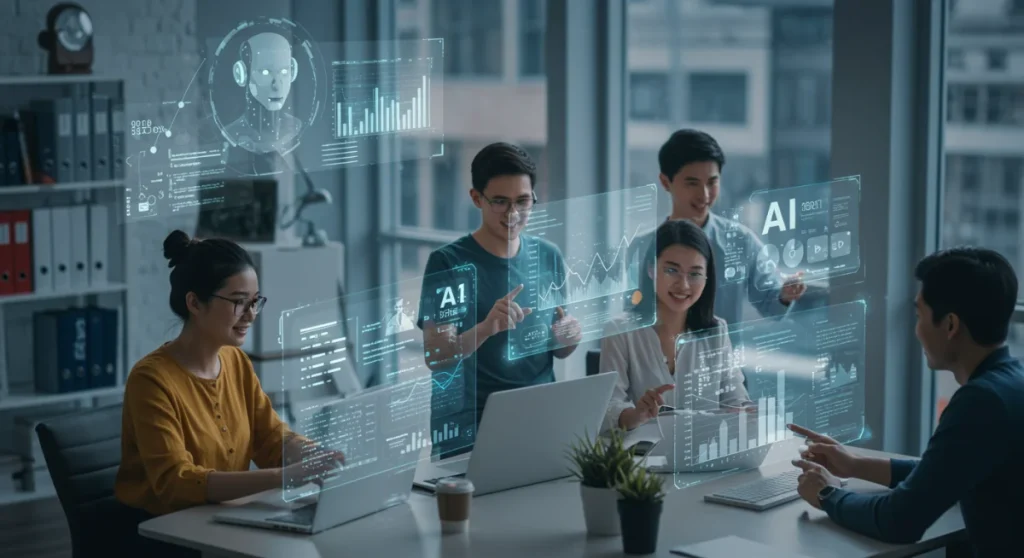
Generative AI, encompassing models capable of producing text, images, audio, and even video from simple prompts, is no longer a futuristic concept but a present-day reality in US marketing departments. Its rapid integration is driven by an insatiable demand for fresh, engaging content across an ever-expanding array of digital channels. Marketers are recognizing that relying solely on traditional methods cannot keep pace with the volume and velocity required to capture and retain audience attention in today’s hyper-connected world.
The initial skepticism surrounding AI’s creative capabilities has largely given way to an understanding of its potential as a powerful co-pilot for human creativity. Companies are investing heavily in AI solutions, from enterprise-level platforms to specialized tools, to augment their content teams. This strategic adoption is aimed at not only increasing output but also enhancing the quality and relevance of marketing materials, ensuring they resonate deeply with target audiences.
Redefining content ideation and strategy
One of the most significant impacts of generative AI is its ability to revolutionize the initial stages of content creation, particularly ideation and strategy. AI models can analyze vast datasets of market trends, consumer behavior, and competitor strategies to identify gaps and opportunities that human teams might overlook. This analytical prowess translates into more informed and effective content strategies.
Data-driven insights: AI provides actionable insights into trending topics, popular formats, and audience preferences, guiding content creators towards high-performing themes.
Automated brainstorming: Generative AI can produce numerous content ideas, headlines, and outlines in minutes, kickstarting the creative process and overcoming writer’s block.
Personalized content roadmaps: By understanding audience segments, AI helps tailor content strategies for maximum impact on specific demographics.
The strategic advantage gained from AI-powered ideation allows US marketing teams to be more proactive and agile, responding to market shifts with unparalleled speed. This shift from reactive to predictive content planning is a cornerstone of achieving accelerated production goals.
Accelerating content production workflows
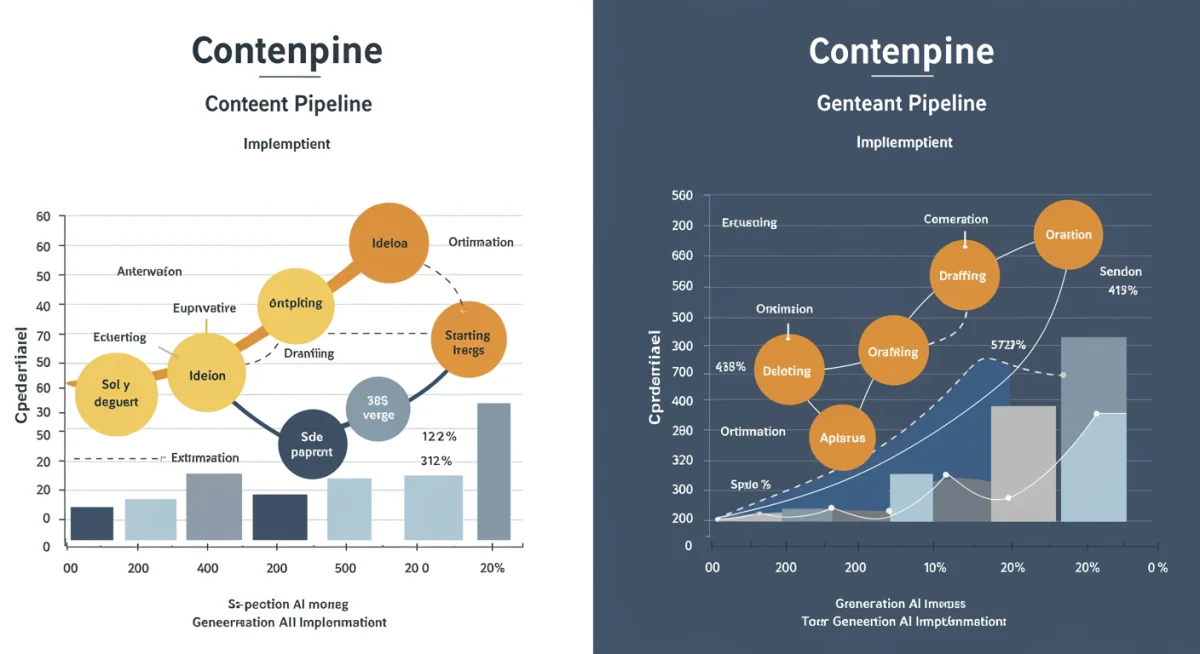
The core promise of generative AI in marketing is its capacity to drastically speed up the content production workflow. From drafting initial concepts to refining final pieces, AI tools are streamlining every step, allowing human marketers to focus on higher-value tasks such as strategic oversight, creative direction, and brand storytelling. This efficiency gain is crucial for meeting the ambitious 40% faster production target.
By automating repetitive and time-consuming tasks, generative AI frees up valuable human resources. Instead of spending hours on initial drafts or basic research, content creators can dedicate their expertise to refining AI-generated outputs, ensuring brand voice consistency, and adding the human touch that truly connects with audiences. This symbiotic relationship between human and AI is proving to be a game-changer for productivity.
Drafting and iteration at scale
Generative AI excels at producing various content formats at an unprecedented scale. This capability is particularly beneficial for US marketing teams managing diverse campaigns across multiple channels, where content variety and volume are paramount.
Rapid text generation: AI can quickly draft blog posts, social media captions, email newsletters, and ad copy, providing a solid foundation for human editors.
Visual content creation: Tools like DALL-E and Midjourney enable marketers to generate unique images, illustrations, and even short video clips, reducing reliance on stock imagery and costly design work.
Multilingual adaptations: AI facilitates rapid translation and localization of content, allowing US brands to reach diverse audiences within the country and globally with minimal effort.
The ability to generate multiple iterations of content quickly means marketers can A/B test more effectively, identify optimal messaging, and refine campaigns with agility. This iterative process, once laborious, is now accelerated, leading to more impactful and data-driven content decisions.
Enhancing content quality and personalization
Beyond speed, generative AI is also significantly contributing to the improvement of content quality and its personalization. Generic content struggles to cut through the noise; today’s consumers expect highly relevant and engaging experiences. AI helps deliver this by enabling marketers to create content that feels tailor-made for individual preferences and needs.
AI algorithms can analyze individual user data, purchase history, browsing behavior, and demographic information to generate content that resonates directly with specific audience segments. This level of personalization, once difficult and resource-intensive to achieve at scale, is now becoming a standard practice, leading to higher engagement rates and stronger customer loyalty.
Maintaining brand voice and consistency
One common concern with AI-generated content is the potential loss of brand voice and consistency. However, advanced generative AI models can be trained on a brand’s existing content, style guides, and communication principles to ensure that all new material aligns perfectly with the brand’s established identity. This training allows AI to learn nuances, tone, and specific terminology.
Human oversight remains critical in this process. Marketers act as curators and editors, refining AI outputs to ensure they not only convey the intended message but also reflect the unique personality and values of the brand. This collaborative approach ensures that while production speed increases, brand integrity is maintained and even strengthened through consistent messaging.
Challenges and considerations for US marketers
While the benefits of generative AI are substantial, its implementation in US marketing is not without challenges. Addressing these considerations proactively is essential for successful integration and realizing the projected 40% production increase by mid-2026. Data privacy, ethical considerations, and the need for skilled talent are paramount.
The responsible adoption of AI requires careful planning and continuous evaluation. Marketers must navigate the complexities of intellectual property, potential biases in AI outputs, and the evolving regulatory landscape. Furthermore, investing in training and upskilling human teams to work effectively with AI tools is crucial for maximizing their potential and ensuring a smooth transition.
Ethical AI deployment and data privacy
The ethical implications of generative AI are a significant concern. Marketers must ensure that AI-generated content is free from bias, misinformation, and discriminatory language. Robust review processes and guidelines are necessary to prevent unintended consequences and maintain consumer trust. Data privacy is another critical area; AI systems often require access to vast amounts of data, necessitating strict adherence to regulations like CCPA and upcoming federal privacy laws.
Bias mitigation: Regularly review AI outputs for unintended biases and implement feedback loops to refine models.
Transparency: Be transparent with audiences when content is AI-assisted, fostering trust and managing expectations.
Data security: Implement stringent data governance policies to protect consumer data used by AI models.
By prioritizing ethical considerations and data privacy, US marketing teams can build a foundation of trust with their audience, ensuring that AI enhances rather than detracts from brand reputation.
Measuring ROI and impact on marketing teams
Quantifying the return on investment (ROI) of generative AI in content creation is vital for demonstrating its value and securing continued investment. Marketers are developing new metrics and frameworks to assess not only the increased volume of content but also its improved performance and the efficiency gains within their teams. The 40% faster production target serves as a clear benchmark for success.
Beyond quantitative metrics, the impact on human marketing teams is also significant. AI can alleviate the burden of repetitive tasks, allowing creative professionals to engage in more strategic, innovative, and fulfilling work. This shift can lead to higher job satisfaction, reduced burnout, and a more engaged workforce, ultimately benefiting the overall marketing organization.
Key performance indicators for AI content
To effectively measure the impact of generative AI, marketers are focusing on a range of KPIs that go beyond traditional content metrics. These indicators help paint a comprehensive picture of AI’s contribution to business objectives.
Content velocity: Tracking the time from ideation to publication for various content types.
Engagement rates: Analyzing likes, shares, comments, and time spent on AI-assisted content.
Conversion metrics: Measuring lead generation, sales, and customer sign-ups attributed to AI-powered campaigns.
Resource reallocation: Quantifying the hours saved on manual tasks and redirected towards strategic initiatives.
By rigorously tracking these KPIs, US marketing teams can continuously optimize their AI strategies, ensuring that generative AI is not just a tool for speed but a genuine driver of business growth and innovation.
The future of content creation: human-AI collaboration
The trajectory for generative AI in US marketing points towards a future defined by seamless human-AI collaboration. The goal is not to replace human creativity but to augment it, enabling marketers to achieve previously unattainable levels of efficiency, personalization, and creative output. This partnership will be key to sustaining competitive advantage in a rapidly evolving digital landscape.
As AI tools become more sophisticated and intuitive, the line between AI-generated and human-created content will blur, leading to hybrid forms of expression that leverage the best of both worlds. The focus will shift from simply creating content to crafting resonant brand experiences at scale, powered by intelligence and guided by human insight. The 40% faster production goal is merely a stepping stone towards an even more dynamic and innovative future for content marketing.
Upskilling the marketing workforce
To fully embrace this future, US marketing teams must invest in upskilling their workforce. Training programs focused on AI literacy, prompt engineering, and ethical AI usage will be critical. Marketers will need to understand how to effectively interact with AI tools, interpret their outputs, and integrate them into existing workflows. This evolution of skills will transform traditional marketing roles.
Prompt engineering: Mastering the art of crafting effective prompts to guide AI in generating desired content.
AI tool proficiency: Gaining expertise in various generative AI platforms and their specific capabilities.
Ethical guidelines: Understanding the responsible use of AI and its societal implications.
The successful integration of generative AI hinges on a skilled and adaptable human workforce, capable of leveraging these powerful tools to unlock new dimensions of creativity and efficiency in content creation.
Key Aspect
Brief Description
Production Speed Goal
Achieve 40% faster content production by mid-2026 using generative AI.
Workflow Enhancement
AI automates ideation, drafting, and iteration, freeing human marketers for strategy.
Quality & Personalization
AI improves content relevance and tailors experiences for specific audience segments.
Challenges & Ethics
Addressing bias, privacy, and upskilling workforce for responsible AI integration.
Frequently asked questions about generative AI in content marketing
What is generative AI in the context of US marketing?▼
Generative AI refers to artificial intelligence models that can create new content, such as text, images, or audio, from various inputs. In US marketing, it’s used to automate content creation tasks, enhance ideation, personalize messaging, and significantly speed up production cycles for diverse campaigns.
How can generative AI help achieve 40% faster content production?▼
Generative AI accelerates content production by automating repetitive tasks like drafting initial content, generating multiple creative variations, and assisting with research. This efficiency allows human marketers to focus on strategic oversight, refinement, and creative direction, drastically reducing the time from concept to publication.
What are the main benefits of using generative AI for content quality?▼
Beyond speed, generative AI enhances content quality by enabling deeper personalization based on audience data, ensuring brand voice consistency through training, and facilitating more effective A/B testing. This results in more relevant, engaging, and high-performing content that resonates with target audiences.
What are the ethical considerations when deploying generative AI in marketing?▼
Ethical deployment requires addressing potential biases in AI outputs, ensuring data privacy compliance, and maintaining transparency with consumers about AI-assisted content. Marketers must implement robust review processes to prevent misinformation and uphold brand integrity, prioritizing responsible AI usage.
How will generative AI impact human marketing roles in the US?▼
Generative AI will transform human marketing roles by shifting focus from manual tasks to strategic thinking, creative refinement, and AI management. Marketers will need to upskill in areas like prompt engineering and ethical AI usage, becoming curators and strategists rather than just content creators, fostering a collaborative human-AI ecosystem.
Conclusion
The journey towards harnessing generative AI for content creation in US marketing is well underway, with a clear vision of achieving a 40% faster content production rate by mid-2026. This ambitious goal is not merely about increasing output; it is about fundamentally rethinking how marketing content is developed, optimized, and delivered. By embracing AI as a powerful partner, US marketing teams are poised to unlock unprecedented levels of efficiency, creativity, and personalization. While challenges related to ethics, data privacy, and upskilling remain, the strategic integration of generative AI promises a more dynamic, responsive, and impactful future for the entire industry, where human ingenuity and artificial intelligence converge to create compelling narratives at scale.