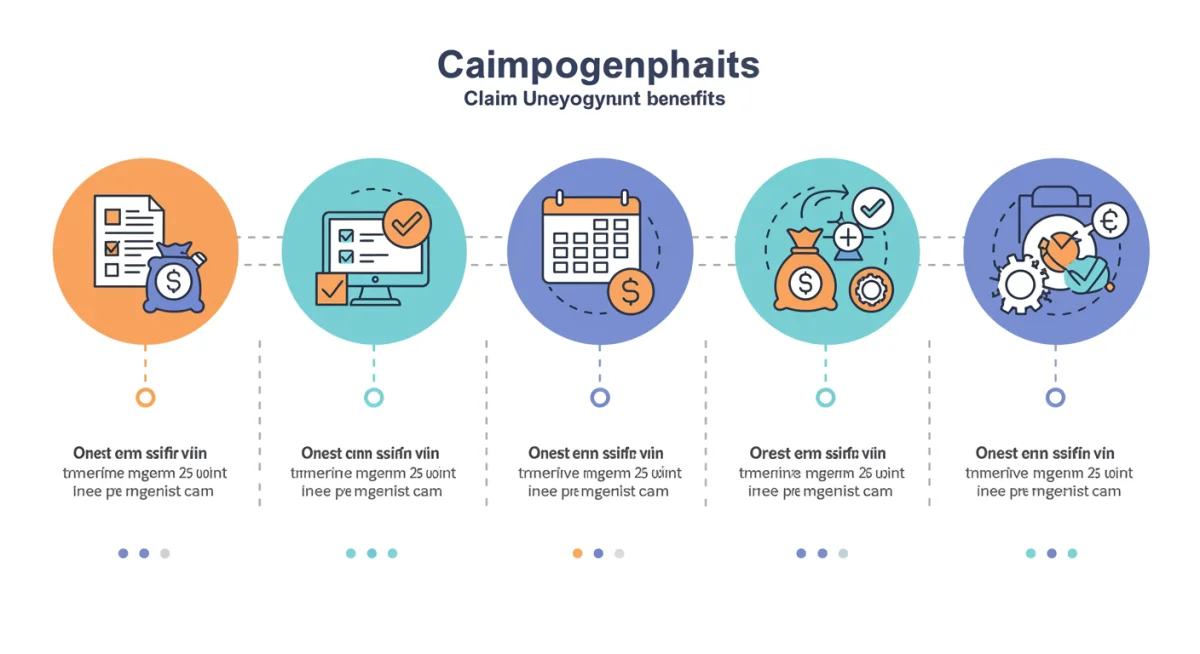
Unemployment Benefits 2026: Your 5-Step Claim Guide
This guide provides a clear 5-step process for understanding and claiming unemployment benefits in 2026, aiming for payment receipt within three weeks for eligible individuals in the US.
Filing for unemployment benefits in 2026 involves a streamlined 5-step process designed to help eligible individuals in the United States secure financial assistance and potentially receive payments within three weeks.
Navigating the landscape of unemployment benefits 2026 can seem daunting, especially when facing unexpected job loss. However, understanding the process is key to swiftly securing the financial support you need. This comprehensive guide breaks down the essential steps for filing your claim and aims to help you receive payments within a crucial three-week timeframe.
Understanding Unemployment Benefits Eligibility in 2026
Before initiating any claim, it’s crucial to grasp the fundamental eligibility criteria for unemployment benefits in 2026. While federal guidelines provide a framework, each state administers its own program, meaning specific requirements can vary. Generally, eligibility hinges on your work history, reasons for unemployment, and continued availability for work.
Most states require you to have earned a certain amount of wages during a specified base period, typically the first four of the last five completed calendar quarters before you filed your claim. This ensures that only individuals with a recent attachment to the workforce are eligible. The amount of earnings needed can differ significantly by state, so checking your state’s specific Department of Labor or equivalent agency website is the first critical step.
Key Eligibility Factors
Several factors contribute to determining your eligibility. Understanding these can help you prepare your documentation and avoid common pitfalls during the application process. It’s not just about losing a job; it’s about the circumstances surrounding that loss and your current situation.
Monetary Eligibility: You must have earned sufficient wages during your base period. States use different formulas, often based on a percentage of your highest-earning quarter or total wages.
Reason for Separation: You must be unemployed through no fault of your own. This typically covers layoffs, company closures, or reductions in force. If you quit your job, you might still be eligible under certain circumstances, such as for good cause related to the job or your employer.
Availability and Ability to Work: You must be able and available to work, and actively seeking employment. This usually means you are physically and mentally capable of performing work and are participating in job search activities.
Beyond these primary factors, states may have additional requirements, such as waiting periods or specific documentation needs. It is always advisable to consult your state’s official unemployment agency website for the most accurate and up-to-date information relevant to your situation. Being well-informed about these criteria will significantly streamline your application process.
Step 1: Gathering Essential Documentation for Your Claim
The success and speed of your unemployment benefits claim in 2026 largely depend on how well-prepared you are with your documentation. Before you even begin the online application, compile all necessary personal and employment information. This proactive approach minimizes delays and ensures you can accurately complete all required fields.
Think of this step as laying the groundwork. Missing even a small piece of information can lead to your application being flagged for review, extending the processing time beyond the desired three weeks. Having everything organized will make the online submission process much smoother and less stressful.
What You’ll Need
Here’s a comprehensive list of documents and information you should have readily available:
Personal Identification: Your Social Security Number (SSN) is paramount. Also, have your driver’s license or state ID handy for verification purposes.
Employment History: Details of your last employer, including their name, address, phone number, and Federal Employer Identification Number (FEIN). You’ll also need your start and end dates of employment, and the reason for separation.
Wage Information: Recent pay stubs, W-2 forms for the last 18 months, or 1099 forms if you were an independent contractor (though eligibility for independent contractors varies by state). This helps establish your monetary eligibility.
Bank Account Information: Your bank’s routing number and your account number for direct deposit. This is the fastest and most secure way to receive payments.
Additionally, if you are not a US citizen, you might need your Alien Registration Number or other work authorization documents. For military personnel, your DD Form 214 might be required. Collect all relevant documents in a secure place before proceeding to the next step. This preparation is a critical component of a swift claim process.
Step 2: Filing Your Initial Unemployment Claim Online
Once you have all your documentation in order, the next crucial step in securing your unemployment benefits 2026 is to file your initial claim. In today’s digital age, most states have transitioned to online application portals, which are generally the fastest and most efficient way to submit your information. Avoid paper applications unless absolutely necessary, as they can significantly prolong the processing time.
Access your state’s official Department of Labor or Workforce Development website. Look for a section specifically dedicated to unemployment insurance or benefits. The portal will guide you through a series of questions designed to gather all the necessary information for your claim. It’s essential to answer truthfully and completely to prevent any discrepancies that could delay your application.
Navigating the Online Portal
The online application process typically involves several sections, each requiring specific details. Take your time to review each question carefully. Some common sections include:
Personal Information: Your name, address, contact details, and Social Security Number.
Employment History: Detailed information about your most recent employer and possibly previous employers within the base period.
Reason for Separation: A clear and concise explanation of why you are no longer employed. Be factual and stick to the verifiable details.
Direct Deposit Information: Your bank details for payment processing.
After completing all sections, you will usually be prompted to review your application before final submission. This review is vital to catch any errors or omissions. Once submitted, you should receive a confirmation number or email. Keep this confirmation for your records, as it serves as proof of your application and may be needed for future inquiries. This digital submission marks the official start of your claim processing.
Step 3: Understanding the Waiting Period and Initial Review
After successfully filing your initial claim for unemployment benefits 2026, you will enter a period known as the waiting week, followed by an initial review phase. While the goal is to receive payments within three weeks, understanding this interim period is essential for managing expectations and knowing what to anticipate next. Most states have a non-compensable waiting week, meaning you won’t receive payment for the first week you are eligible, but you must still file your weekly claim.
During this initial review, the state unemployment agency evaluates your application against their eligibility criteria. They verify your identity, employment history, and the reason for your separation from your last job. This often involves contacting your former employer to confirm the details you provided. This communication helps prevent fraudulent claims and ensures legitimate applicants receive benefits.
What Happens During Review
The review process is critical for determining your eligibility and can involve several steps:
Employer Contact: Your former employer will typically be contacted to verify your employment dates, wages, and the reason for your separation. They have a right to respond and provide their perspective.
Wage Verification: The agency will cross-reference your reported wages with their records to ensure monetary eligibility. Discrepancies can lead to requests for additional documentation.
Potential Interviews: In some cases, particularly if there are conflicting accounts from you and your employer, or if your reason for separation is complex, you may be contacted for a phone interview to clarify details.
It’s important to remain responsive during this period. If the agency requests additional information or an interview, respond promptly and provide accurate details. Delays in responding can significantly extend the processing time for your claim. This review phase is a necessary step to ensure the integrity of the unemployment system and your eligibility for benefits.
Step 4: Certifying for Weekly Benefits and Job Search Requirements
Once your initial claim for unemployment benefits 2026 has been approved, the process shifts to a weekly routine of certifying your eligibility. This is a continuous requirement to receive ongoing payments. Each week, you must inform your state unemployment agency that you are still unemployed, able and available to work, and actively seeking new employment. This weekly certification is critical; failing to do so will halt your benefit payments.
Most states provide an online portal for weekly certification, similar to the initial application. You’ll typically answer a series of questions about any work performed, earnings received, and your job search activities for the past week. It’s crucial to be accurate and honest in your responses, as misrepresenting information can lead to penalties or disqualification.
Meeting Job Search Requirements
A fundamental condition for receiving unemployment benefits is demonstrating an active job search. States have specific requirements regarding the number of job contacts you must make each week and how you must document them. These requirements are put in place to encourage reemployment and ensure that benefits are temporary support, not a long-term solution.
Number of Contacts: Each state mandates a minimum number of job search activities, often between three to five contacts per week. These can include applying for jobs, attending job fairs, or participating in approved training programs.
Documentation: You must keep meticulous records of your job search. This includes the date of contact, the name of the employer, the method of contact (e.g., online application, in-person), and the outcome. Many states require you to submit this log as part of your weekly certification.
Approved Activities: Beyond direct job applications, some states allow activities like resume writing workshops, networking events, or vocational training to count towards your job search requirements. Check your state’s guidelines for a comprehensive list.
Consistently meeting these weekly certification and job search requirements is paramount. Any lapse or failure to comply can result in delayed payments or even suspension of your benefits. Establishing a routine for your weekly certification and job search will help ensure a continuous flow of support.
Step 5: Receiving Your Unemployment Payments Within 3 Weeks
The final and most anticipated step in the process of claiming unemployment benefits 2026 is receiving your payments. With diligent adherence to the previous steps, including prompt filing and accurate weekly certifications, many applicants can expect to see their first payment within three weeks of their initial claim submission. This timeframe, however, is an average and can vary based on state processing times, the complexity of your case, and the accuracy of your submitted information.
Payments are typically distributed via direct deposit to your bank account or through a state-issued debit card. Direct deposit is generally the faster and more convenient option, ensuring funds are available as quickly as possible. If you opted for a debit card, be aware that it might take an additional few days to receive the card in the mail after your first payment is processed.
Factors Influencing Payment Speed
While a three-week target is achievable, several factors can influence how quickly you receive your funds:
State Workload: High volumes of claims, especially during economic downturns, can extend processing times.
Accuracy of Information: Any errors or missing information in your application or weekly certifications will require manual review, causing delays.
Employer Disputes: If your former employer disputes your claim, it can trigger an investigation and potentially an appeal process, which will significantly delay payments.
Waiting Week: Remember, the first eligible week is often a non-compensable waiting week, meaning your first payment will cover the second week of unemployment.
To monitor your payment status, most state unemployment portals offer an online account where you can track your claim’s progress, view payment history, and check for any outstanding issues. Regularly checking this portal, especially after your weekly certification, is a proactive way to ensure your benefits are on track. Should you encounter unexpected delays or issues, immediately contact your state’s unemployment agency for clarification and assistance. Your persistence in monitoring and responding to requests is key to timely payment receipt.
Appealing a Denied Unemployment Claim in 2026
Even with careful preparation, sometimes an unemployment claim for unemployment benefits 2026 can be denied. This can be disheartening, but it’s important to remember that a denial is not necessarily the final word. Every applicant has the right to appeal a decision they believe is incorrect. Understanding the appeal process is crucial for those who find themselves in this situation, as it provides a pathway to potentially overturn an unfavorable initial ruling.
The reasons for denial can vary widely, from administrative errors to disputes with your former employer regarding the reason for separation. Regardless of the reason, the first step after receiving a denial notice is to carefully read it. The notice will typically outline the reason for the denial and provide instructions on how to initiate an appeal, including crucial deadlines. Missing these deadlines can jeopardize your ability to challenge the decision.
The Appeal Process: What to Expect
The appeal process is structured to ensure fairness and provide both you and your former employer an opportunity to present your case. It generally involves several stages:
Initial Appeal Request: You must submit a written appeal request within the specified timeframe, usually 10-30 days from the date of the denial notice. This request should clearly state that you wish to appeal the decision.
Hearing: After your appeal request is processed, a hearing will be scheduled. This is typically an informal hearing conducted by an impartial administrative law judge (ALJ) or hearing officer. You and your former employer will have the opportunity to present evidence, call witnesses, and cross-examine the other party.
Gathering Evidence: Prepare thoroughly for your hearing. Collect all relevant documents, such as pay stubs, employment contracts, termination letters, and any communication with your employer. Consider bringing witnesses who can corroborate your statements.
If the ALJ rules against you, you may have the option to appeal to a higher authority, such as a state review board or even the courts. While the appeal process can be lengthy, it is a vital safeguard for ensuring that eligible individuals receive the benefits they are entitled to. Seeking legal advice or assistance from advocacy groups specializing in unemployment law can be beneficial during this complex process.
Maximizing Your Chances for Timely Unemployment Benefit Payments
Securing your unemployment benefits 2026 within the targeted three-week timeframe requires more than just following the steps; it demands diligence, accuracy, and proactive engagement. While some factors are beyond your control, many aspects of the application and certification process can be managed effectively to expedite your payments. Maximizing your chances means understanding the system and acting strategically.
One of the most significant ways to ensure timely payments is to double-check every piece of information you submit. Even minor typos or incorrect dates can trigger manual reviews, which inevitably lead to delays. Treat your application as a formal document that requires precision and attention to detail. This meticulous approach from the outset can save you considerable time and frustration down the line.
Best Practices for a Smooth Process
Consider these proactive strategies to keep your claim moving forward efficiently:
Maintain Detailed Records: Keep a personal log of all communications with the unemployment agency and your job search activities. This includes dates, times, names of representatives, and summaries of conversations. This record is invaluable if any discrepancies arise.
Respond Promptly: If the agency requests additional information, an interview, or clarification, respond immediately. Delays on your part directly translate to delays in receiving benefits.
Understand State-Specific Rules: While this guide provides general advice for the US, each state has unique regulations. Familiarize yourself with your specific state’s unemployment handbook or website.
Be Honest and Accurate: Always provide truthful information. Misrepresentation can lead to serious penalties, including disqualification and the requirement to repay benefits.
Furthermore, if you experience any changes in your circumstances—such as finding part-time work, moving, or becoming unable to work—report these changes to the unemployment agency immediately. Transparency helps prevent overpayments and other issues that could complicate your claim. By taking these proactive steps, you significantly increase your likelihood of receiving your unemployment benefits in a timely manner and navigating the system with greater confidence.
Key Step
Brief Description
Gather Documentation
Collect SSN, ID, employer details, and wage records for a smooth application.
File Online Claim
Submit your initial claim via your state’s official unemployment portal for efficiency.
Weekly Certification
Regularly certify your unemployment status and document job search efforts.
Monitor Payments
Track claim status and payments through your online account; contact agency for issues.
Frequently Asked Questions About Unemployment Benefits 2026
How quickly can I expect to receive my first unemployment benefit payment in 2026?▼
With careful preparation and prompt filing, many applicants can expect their first payment within three weeks of their initial claim. This timeframe can vary based on state processing and claim complexity.
What documents are essential for filing an unemployment claim in 2026?▼
You’ll need your Social Security Number, state ID, details of your last employer (name, address, FEIN), employment dates, reason for separation, and recent wage information (pay stubs, W-2s).
Do I need to actively search for a job while receiving unemployment benefits?▼
Yes, most states require you to be able, available, and actively seeking work. You must meet specific weekly job search requirements and document your efforts to continue receiving benefits.
What should I do if my unemployment claim is denied?▼
If your claim is denied, you have the right to appeal. Carefully read the denial notice for instructions and deadlines. Prepare evidence and be ready to present your case at a hearing.
How do I certify for weekly unemployment benefits in 2026?▼
Weekly certification is typically done through your state’s online unemployment portal. You’ll answer questions about your employment status, earnings, and job search activities for the past week.
Conclusion
Navigating the process of claiming unemployment benefits 2026 can be a critical step towards financial stability during periods of job transition. By understanding eligibility, meticulously gathering documentation, filing your claim online promptly, diligently completing weekly certifications, and proactively addressing any issues, you significantly enhance your chances of receiving timely payments. The system is designed to provide a safety net, and with the right approach, you can effectively utilize this support to bridge the gap until your next career opportunity. Stay informed, stay organized, and remember that help is available if you encounter challenges along the way.