Understanding 1.5% GDP Growth Rate 2026: Business & Employment Impact
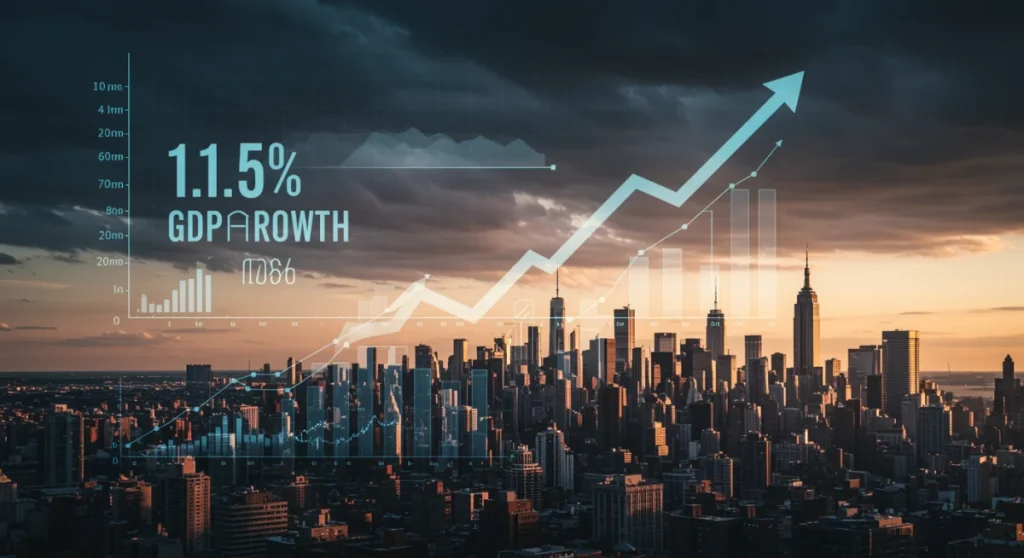
The projected 1.5% GDP growth rate for 2026 in the U.S. signals a period of moderate economic expansion, influencing business investment decisions, labor market dynamics, and consumer spending patterns across various sectors.
The projected 1.5% GDP growth rate for 2026 in the U.S. signals a period of moderate economic expansion, influencing business investment decisions, labor market dynamics, and consumer spending patterns across various sectors.
The economic landscape is constantly shifting, and understanding the projected trajectory of key indicators is crucial for businesses, policymakers, and individuals alike. One such critical indicator is the Gross Domestic Product (GDP) growth rate. For 2026, a projected 1.5% GDP growth rate for the United States presents a nuanced picture, suggesting a period of moderate expansion rather than rapid acceleration. This forecast carries significant implications for various sectors, influencing everything from corporate investment strategies to the stability of the job market.
Decoding the 1.5% GDP Growth Rate: A Moderate Outlook
A 1.5% GDP growth rate for 2026, while positive, indicates a more subdued expansion compared to periods of robust economic boom. This figure suggests that the economy is expected to grow steadily, but without the high-octane momentum that might characterize stronger recoveries or periods of intense innovation. Understanding this moderate pace is fundamental to anticipating its ripple effects across the national economy.
This growth rate often reflects a maturing economic cycle, where the initial rebound from a downturn has leveled off, and sustained growth relies more on productivity gains, stable consumer demand, and measured business investment. It’s a rate that typically allows for controlled inflation and provides a predictable environment for long-term planning, albeit with less room for aggressive expansion.
Factors Influencing the 1.5% Projection
Global Economic Headwinds: International trade tensions, geopolitical instability, and economic slowdowns in major trading partners can dampen export demand and overall global economic activity, impacting U.S. growth.
Inflationary Pressures: Persistent inflation, even if moderating, can erode purchasing power and lead to tighter monetary policies, which in turn can slow down economic expansion.
Consumer Spending Patterns: While resilient, consumer spending might be influenced by factors like wage growth, interest rates, and consumer confidence, all of which play a role in the overall GDP trajectory.
Government Fiscal Policies: Future government spending, tax policies, and regulatory changes can significantly alter the economic environment, either stimulating or constraining growth.
In essence, the 1.5% forecast is a product of complex interactions between domestic and international forces. It requires a careful assessment of these variables to truly grasp the opportunities and challenges they present for businesses and employment.
Impact on Businesses: Strategy and Adaptation
For businesses, a 1.5% GDP growth rate translates into a landscape where cautious optimism often prevails. It’s a period demanding strategic agility rather than aggressive, untethered expansion. Companies will need to fine-tune their operations, focusing on efficiency, innovation, and targeted market penetration to thrive.
This moderate growth environment means that businesses cannot rely solely on a rising tide to lift all boats. Instead, success will increasingly depend on competitive advantages, cost management, and a deep understanding of evolving consumer needs. Investment decisions will likely be scrutinized more closely, with a preference for projects that offer clear returns and mitigate risk.
Investment Decisions and Capital Allocation
In a 1.5% growth scenario, capital allocation becomes a critical strategic lever. Businesses may shift from expansive capital expenditure to more targeted investments. This could include:
Technology Upgrades: Investing in automation, AI, and digital transformation to boost productivity and reduce operational costs.
Supply Chain Optimization: Enhancing resilience and efficiency in supply chains to mitigate future disruptions and improve cost-effectiveness.
Research and Development (R&D): Focusing on innovation to create new products or services that can capture market share even in a slower growth environment.
Human Capital Development: Investing in employee training and skill development to improve workforce efficiency and adaptability.
These strategic shifts are essential for maintaining profitability and market position when the overall economic expansion is less dynamic. Companies that fail to adapt their investment strategies may find themselves struggling to keep pace with more agile competitors.
Employment Landscape: Challenges and Opportunities
The labor market is intrinsically linked to GDP growth, and a 1.5% rate presents a mixed bag of challenges and opportunities for employment. While it suggests continued job creation, the pace might be slower, and certain sectors could experience more significant shifts than others. The emphasis will likely be on skill development, workforce flexibility, and strategic hiring.
A moderate growth environment often means that employers become more selective in their hiring processes, prioritizing candidates with specialized skills and a proven ability to contribute to productivity gains. This can lead to increased competition for desirable roles and a greater need for individuals to continuously upskill or reskill to remain competitive.
Sectoral Employment Shifts
Not all sectors will experience the 1.5% growth uniformly. Some areas may see robust job growth due to specific demand or technological advancements, while others might face stagnation or even contraction. For instance, sectors heavily reliant on consumer discretionary spending could feel the pinch, while essential services or technology-driven industries may continue to expand.
Key areas to watch include:
Technology and AI: Continued demand for skilled professionals in software development, data science, cybersecurity, and AI integration.
Healthcare: Sustained growth driven by an aging population and advancements in medical technology.
Green Energy: Expansion in renewable energy sectors, creating new jobs in manufacturing, installation, and research.
Logistics and Supply Chain: Ongoing need for efficiency and resilience, driving demand for skilled workers in these areas.
Understanding these sectoral dynamics is crucial for both job seekers and educational institutions, allowing them to align skills with future labor market demands. The ability to adapt to these shifts will be paramount for individual career success.
Consumer Behavior and Spending Patterns
Consumer spending is a significant component of GDP, and a 1.5% growth rate implies a certain level of stability but also a potential for changing priorities among households. When economic growth is moderate, consumers tend to become more discerning with their purchases, often prioritizing value, durability, and essential goods and services over luxury items or non-essential spending.
This shift in consumer behavior can have a profound impact on retail, hospitality, and other consumer-facing industries. Businesses in these sectors will need to adjust their offerings, marketing strategies, and pricing to align with evolving consumer preferences and budgetary constraints.
Influence of Inflation and Interest Rates
Even with moderate GDP growth, the lingering effects of inflation and current interest rates will continue to shape consumer decisions. Higher interest rates can make borrowing more expensive, impacting big-ticket purchases like homes and cars, and potentially leading to a more conservative approach to debt.
Furthermore, if inflation remains elevated, real wage growth might be limited, meaning that while salaries may increase, their purchasing power could be diminished. This scenario encourages consumers to:
Prioritize Savings: A focus on building emergency funds and long-term financial security.
Seek Value: Opting for more affordable alternatives or discounts on goods and services.
Delay Non-Essential Purchases: Postponing or foregoing discretionary spending to manage household budgets more effectively.
Businesses must remain attuned to these shifts, adapting their product lines, pricing strategies, and promotional activities to resonate with a more budget-conscious consumer base. Understanding the psychology behind these spending patterns will be key to navigating the market successfully.
Policy Responses and Economic Stability
In an environment of 1.5% GDP growth, governmental and central bank policies play a crucial role in fostering economic stability and encouraging sustainable growth. Policymakers will likely focus on a delicate balancing act, aiming to support economic activity without reigniting inflationary pressures or creating undue financial instability. This often involves a blend of fiscal and monetary tools.
The Federal Reserve, for instance, will monitor inflation and employment data closely to determine appropriate interest rate adjustments. Similarly, legislative bodies may consider targeted fiscal measures, such as infrastructure spending or tax incentives, to stimulate specific sectors or address structural economic challenges. The goal is typically to create a predictable and supportive environment for businesses and consumers.
Potential Policy Levers
Several policy avenues could be explored to influence the 1.5% growth trajectory:
Monetary Policy Adjustments: The Federal Reserve might adjust benchmark interest rates to either stimulate borrowing and investment or to cool down an overheating economy, depending on the prevailing conditions.
Fiscal Stimulus: Government spending on infrastructure projects, research, and development, or targeted tax cuts can inject capital into the economy, creating jobs and boosting demand.
Regulatory Reforms: Streamlining regulations in key industries can reduce compliance costs for businesses, potentially encouraging investment and innovation.
Trade Agreements: Developing and strengthening international trade agreements can open new markets for U.S. goods and services, contributing to export-driven growth.
Effective policy coordination is vital. Disjointed or conflicting policies could inadvertently hinder growth or exacerbate existing economic challenges. Therefore, close monitoring of economic indicators and a flexible policy approach will be essential to guide the economy through this period of moderate expansion.
Long-Term Outlook: Preparing for the Future
While the 1.5% GDP growth rate for 2026 provides a snapshot of the near-term economic future, it’s equally important for businesses and individuals to consider the long-term implications and prepare for evolving economic realities. Moderate growth periods often serve as a foundation for future, more robust expansion, provided that underlying structural issues are addressed and innovation is fostered.
The ability to adapt to technological advancements, demographic shifts, and global economic changes will be crucial for sustained success. This involves continuous learning, strategic foresight, and a willingness to embrace new business models and employment opportunities. A proactive approach to long-term planning can transform potential challenges into significant advantages.
Strategic Foresight and Resilience
Building economic resilience is paramount in an environment of moderate growth. This means not only preparing for potential downturns but also positioning for future growth opportunities. Businesses should focus on:
Diversification: Spreading investments and market reach to reduce reliance on single products, services, or geographical areas.
Innovation Ecosystems: Fostering partnerships with startups, research institutions, and technology providers to stay at the forefront of innovation.
Talent Development: Investing in continuous training and upskilling of the workforce to ensure a future-ready talent pool.
Financial Prudence: Maintaining healthy balance sheets, managing debt effectively, and building reserves to weather economic fluctuations.
For individuals, this translates into investing in education, acquiring adaptable skills, and engaging in financial planning. The long-term outlook is not just about reacting to economic trends, but actively shaping one’s future within them. The 1.5% growth rate, seen through a long-term lens, can be a period of strategic recalibration and preparation for the next wave of economic opportunity.
Key Aspect
Impact of 1.5% GDP Growth
Business Investment
Shifts towards efficiency, technology, and targeted R&D rather than broad expansion.
Employment Market
Slower job creation, increased demand for specialized skills, and sectoral shifts.
Consumer Spending
More cautious, value-driven purchases; focus on essentials and savings.
Policy Response
Balanced fiscal and monetary actions to ensure stability without fueling inflation.
Frequently Asked Questions About 2026 GDP Growth
What does a 1.5% GDP growth rate signify for the U.S. economy in 2026?▼
A 1.5% GDP growth rate indicates a moderate, stable expansion of the U.S. economy. It suggests continued but slower growth compared to boom periods, emphasizing efficiency and strategic adaptation for businesses rather than aggressive expansion. It allows for controlled inflation.
How will a 1.5% GDP growth affect business investment decisions?▼
Businesses are likely to become more cautious and strategic. Investments will focus on technology, efficiency, supply chain optimization, and R&D to enhance productivity and competitive advantage, rather than large-scale, speculative capital expenditures.
What are the implications of this growth rate for the employment market?▼
The employment market will likely see continued job creation, but at a slower pace. There will be increased demand for specialized skills, and sectoral shifts will be prominent, requiring workers to upskill or reskill to remain competitive.
Will consumer spending patterns change with a 1.5% GDP growth?▼
Yes, consumers are expected to become more discerning, prioritizing value, essential goods, and savings. Higher interest rates and potential inflation may lead to delayed non-essential purchases and a conservative approach to household budgets.
What role do government policies play in a 1.5% GDP growth scenario?▼
Policymakers will aim for stability through balanced fiscal and monetary actions. The Federal Reserve might adjust interest rates, while legislative bodies could implement targeted fiscal measures like infrastructure spending to support sustainable growth without fueling inflation.
Conclusion
The projected 1.5% GDP growth rate for 2026 signals a period of moderate but steady economic expansion for the United States. This outlook necessitates a strategic approach from businesses, focusing on efficiency, innovation, and targeted investments to maintain and enhance their competitive edge. For the employment landscape, it implies a continued emphasis on skill development and adaptability to evolving sectoral demands. Consumers, in turn, are likely to adopt more cautious and value-driven spending habits, influenced by inflation and interest rate dynamics. Ultimately, navigating this moderate growth environment successfully will require a blend of proactive planning, agile adaptation to market shifts, and effective policy responses to foster long-term economic stability and prepare for future opportunities.