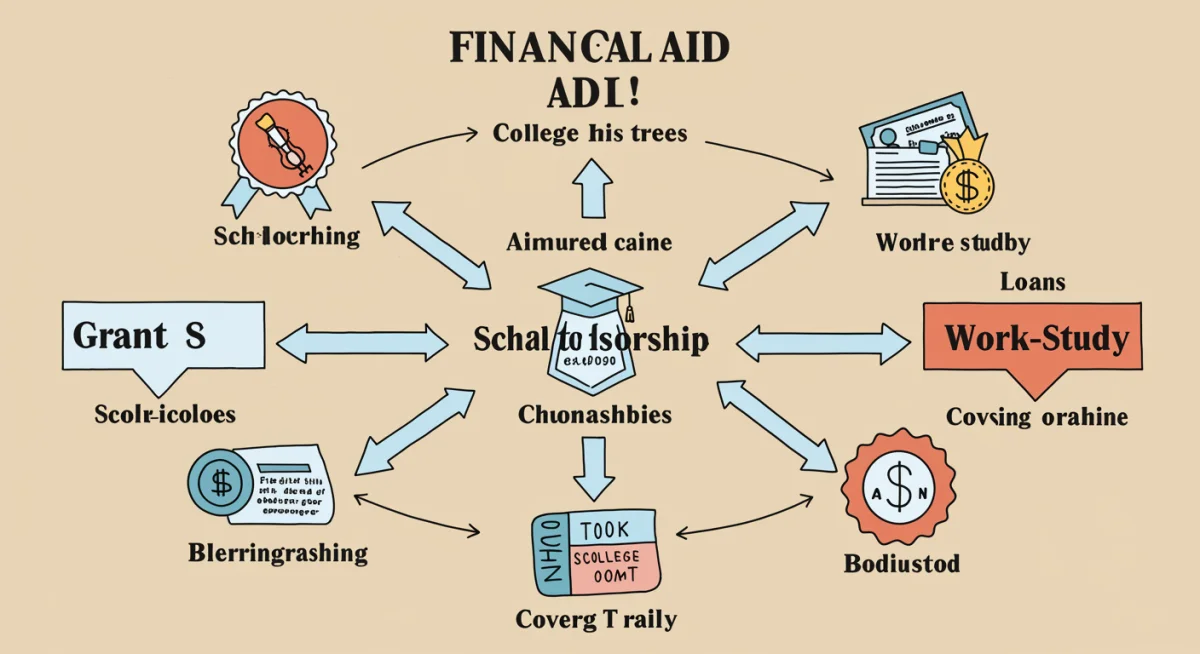
Understanding the significant updates to the Free Application for Federal Student Aid (FAFSA) for the 2026-2027 academic year is crucial for students seeking to maximize their eligibility for federal grants and scholarships.
Understanding the significant updates to the Free Application for Federal Student Aid (FAFSA) for the 2026-2027 academic year is crucial for students seeking to maximize their eligibility for federal grants and scholarships.
Preparing for college can be an exciting yet daunting endeavor, especially when considering the financial aspects. For students and families across the United States, the Free Application for Federal Student Aid (FAFSA) is the gateway to unlocking crucial financial assistance. As we look ahead to the 2026-2027 academic year, it’s vital to grasp the upcoming changes to the Federal Student Aid (FAFSA) for the 2026-2027 Academic Year: Key Changes and How to Maximize Your Grants and Scholarships. These modifications are designed to streamline the application process and potentially expand eligibility for many, but navigating them successfully requires careful attention and proactive planning.
Understanding the FAFSA Simplification Act’s Impact
The FAFSA Simplification Act represents a monumental overhaul of the federal student aid system, aiming to make the application process less complex and more accessible for millions of students. These changes, which began phasing in with the 2024-2025 FAFSA cycle, will be fully implemented and mature by the 2026-2027 academic year. Understanding the core tenets of this act is foundational to preparing for your aid application.
The primary goal of the simplification is to reduce barriers to higher education by creating a more intuitive and user-friendly experience. This includes a significant reduction in the number of questions on the form, a revised methodology for calculating financial need, and an expanded reach for Pell Grant eligibility. These updates are not merely cosmetic; they represent a fundamental shift in how federal student aid is assessed and awarded.
Key Changes to the FAFSA Form
The FAFSA form itself is undergoing a transformation. The number of questions has been drastically cut, making the application process faster and less intimidating. This reduction is a direct response to feedback from students and families who found the previous form cumbersome and confusing.
Fewer Questions: The FAFSA will feature fewer questions, streamlining the application process.
Direct Data Exchange: Increased reliance on direct data exchange with the IRS for tax information, reducing manual entry errors.
Simplified Language: The language used throughout the form is being updated to be more straightforward and easier to understand.
Beyond the form’s length, the integration of direct data exchange with the IRS is a game-changer. This feature aims to automatically import federal tax information, minimizing the need for applicants to manually input complex financial data. This not only saves time but also significantly reduces the potential for errors that could delay aid processing or lead to incorrect eligibility determinations. The overall design is moving towards a more digital-first, user-centric experience.
The New Student Aid Index (SAI) vs. EFC
One of the most significant changes introduced by the FAFSA Simplification Act is the replacement of the Expected Family Contribution (EFC) with the Student Aid Index (SAI). While both are metrics used to determine a student’s financial need, the SAI is calculated using a revised methodology that aims to be more equitable and transparent. This shift will have a direct impact on how much aid students are eligible to receive.
The EFC, which has been in use for decades, often confused families because it wasn’t always what they actually expected to pay. The SAI is designed to be a clearer indicator of a student’s financial strength and will be a key factor in determining federal aid eligibility, including Pell Grants. Understanding how the SAI is calculated is crucial for students to estimate their potential aid.
How SAI is Calculated and its Implications
The SAI calculation introduces several important modifications. One notable change is the elimination of the number of family members in college as a factor in the calculation. While this might seem counterintuitive, it’s part of a broader effort to simplify and standardize the formula. Another significant update is the expansion of negative SAI values, meaning that students with very high financial need could see an SAI of less than zero, potentially increasing their eligibility for maximum aid.
Negative SAI Values: The SAI can now be a negative number (down to -1500), indicating a higher level of financial need.
Elimination of Number in College: The number of family members attending college will no longer be a factor in the SAI calculation.
Alimony as Untaxed Income: Alimony payments received will no longer be counted as untaxed income.
These changes mean that some students who previously received minimal aid might find themselves eligible for more substantial assistance. Conversely, some families might see their aid eligibility decrease, particularly those with multiple children in college, as that factor is no longer considered. It’s essential for families to re-evaluate their financial situation in light of these new calculations to anticipate their SAI.
Expanded Pell Grant Eligibility and What it Means
The Pell Grant program, a cornerstone of federal student aid, is also undergoing significant enhancements under the FAFSA Simplification Act. These changes are designed to expand eligibility for the Pell Grant, making it accessible to more students from low-income backgrounds. For the 2026-2027 academic year, the impact of these changes will be fully realized, offering a more robust safety net for those pursuing higher education.
The Pell Grant is often considered the foundation of a student’s financial aid package because, unlike loans, it does not need to be repaid. Expanding access to this grant can significantly reduce the financial burden of college, making higher education a more attainable goal for a wider range of students. This expansion is a direct reflection of the government’s commitment to increasing educational opportunities.
New Criteria for Pell Grant Awards
The new Pell Grant eligibility criteria will be tied more directly to a student’s income and family size, utilizing federal poverty guidelines. This simplified approach aims to provide a clearer path to Pell Grant eligibility for many. Students whose adjusted gross income (AGI) falls within specific percentages of the federal poverty level will automatically qualify for a maximum or minimum Pell Grant, regardless of their SAI calculation.
Income-Based Eligibility: Automatic maximum or minimum Pell Grant eligibility based on Adjusted Gross Income (AGI) relative to poverty levels.
Increased Access: More students are projected to qualify for Pell Grants due to updated eligibility formulas.
Clearer Guidelines: Simplified criteria make it easier for applicants to understand their potential Pell Grant award.
This new approach is expected to significantly increase the number of Pell Grant recipients and the amount of aid many students receive. It moves away from the complexities of the EFC-based system, offering a more direct and transparent method for determining who receives this vital funding. Students should pay close attention to how their income and family size align with the new poverty guidelines to understand their potential Pell Grant award.
Maximizing Your Grants and Scholarships: Beyond FAFSA
While the FAFSA is the cornerstone of federal financial aid, it’s crucial to remember that it’s just one piece of the puzzle. To truly maximize your grants and scholarships for the 2026-2027 academic year, you need a comprehensive strategy that extends beyond the federal application. This involves exploring state-specific aid, institutional grants, and a myriad of private scholarship opportunities.
Many students make the mistake of relying solely on federal aid, potentially leaving significant amounts of money on the table. A proactive and diversified approach to financial aid searching can yield substantial benefits, helping to reduce reliance on student loans and making college more affordable. Think of it as building a robust financial aid portfolio.
Strategies for Finding Additional Funding
Beyond federal aid, there’s a vast landscape of financial assistance available. State governments often offer their own grant programs, which can be substantial. Colleges and universities also have considerable endowments and institutional aid programs designed to attract and support students. These often require separate applications or specific criteria, so thorough research is key.
State Aid Programs: Research your state’s higher education agency for specific grant and scholarship opportunities.
Institutional Scholarships: Apply directly to colleges and universities for their merit-based and need-based aid.
Private Scholarships: Utilize scholarship search engines and local community organizations to find private awards.
Private scholarships, offered by foundations, corporations, and community groups, are another excellent avenue for funding. These can range from small, niche awards to substantial sums, and often have unique eligibility requirements. Dedicate time to searching for and applying to as many relevant private scholarships as possible, as even small awards can add up significantly over time.
Timeline and Preparation for the 2026-2027 FAFSA
The FAFSA for the 2026-2027 academic year will likely open in October 2025, continuing the established cycle. However, with the ongoing implementation of the FAFSA Simplification Act, it’s more important than ever to stay informed about specific dates and any potential adjustments. Early preparation is paramount to ensure you meet all deadlines and secure the maximum aid possible.
Missing deadlines can severely impact your eligibility for certain types of aid, especially state and institutional grants, which often have limited funding. Being organized and starting the application process well in advance will alleviate stress and provide ample time to gather necessary documents and address any questions or issues that may arise.
Essential Steps for a Smooth Application
To ensure a smooth FAFSA application process for 2026-2027, begin by gathering all necessary financial documents, such as tax returns, W-2 forms, and records of untaxed income. Create an FSA ID well in advance, as this is your digital signature for federal student aid. If you are a dependent student, your parents will also need an FSA ID. Ensure all information is accurate and up-to-date.
Obtain an FSA ID: Both student and parent (if dependent) need an FSA ID for electronic signatures.
Gather Financial Documents: Collect tax returns, W-2s, and bank statements from the relevant tax year (e.g., 2024 for 2026-2027).
Meet Deadlines: Pay close attention to federal, state, and institutional FAFSA deadlines.
Once the FAFSA opens, submit your application as soon as possible. Some aid is awarded on a first-come, first-served basis, particularly at the state and institutional levels. After submission, regularly check your FAFSA status and respond promptly to any requests for additional information. Proactive engagement will help ensure your aid package is processed efficiently.
Common Pitfalls to Avoid in Your FAFSA Application
Even with the simplified FAFSA, common mistakes can still delay your application or reduce your aid eligibility. Being aware of these pitfalls beforehand can save you significant time and frustration. The goal is to submit an accurate and complete application the first time around, minimizing the need for corrections and ensuring timely processing of your financial aid.
Many errors stem from misinterpreting questions or rushing through the application. Taking the time to carefully read instructions and double-check all entries can prevent many common issues. Remember, the FAFSA is a crucial financial document, and accuracy is paramount to receiving the aid you deserve.
Preventing Errors and Delays
One frequent error is failing to use the correct tax year’s information. For the 2026-2027 FAFSA, you will use your 2024 tax information. Another common mistake is not linking your FAFSA directly to the IRS data retrieval tool (if available and applicable), leading to manual entry errors. Ensure all required signatures are provided, as an unsigned FAFSA will not be processed. Double-check your Social Security Number and date of birth for accuracy.
Incorrect Tax Year Data: Always use the tax information from the specified prior-prior year (e.g., 2024 taxes for 2026-2027 FAFSA).
Missing Signatures: Ensure all required electronic signatures (FSA IDs) from both student and parent are provided.
Not Using IRS Direct Data Exchange: Utilize the IRS Direct Data Exchange feature to minimize manual entry errors and speed up verification.
Finally, avoid submitting an incomplete application. If you’re unsure about a question, seek help from your school’s financial aid office or the Federal Student Aid website. Submitting a partially completed form can lead to processing delays and a missed opportunity for aid. A thorough review before submission is always recommended.
Resources and Support for FAFSA Applicants
Navigating the complexities of federal student aid, even with simplification, can still be challenging. Fortunately, numerous resources and support systems are available to assist students and families throughout the FAFSA process. Leveraging these resources can provide clarity, answer specific questions, and help you overcome any hurdles you might encounter.
Don’t hesitate to reach out for help. Financial aid professionals are trained to guide you through the application and understand the nuances of eligibility. Utilizing available support can make the difference between a successful application and one that falls short of securing maximum aid.
Where to Find Assistance
The official Federal Student Aid website (StudentAid.gov) is the definitive resource for all things FAFSA. It offers detailed guides, FAQs, and direct contact information for assistance. Your college’s financial aid office is another invaluable resource, providing personalized guidance specific to their institution and often offering workshops or one-on-one counseling sessions.
StudentAid.gov: The official federal resource for FAFSA information, guides, and contact support.
College Financial Aid Offices: Get personalized assistance and specific information regarding institutional aid.
High School Counselors: Many high school counselors are knowledgeable about the FAFSA and can offer initial guidance.
Additionally, many non-profit organizations and community centers offer free FAFSA completion workshops and counseling. These local resources can be particularly helpful for families who prefer in-person assistance or have unique circumstances. Remember, you don’t have to navigate the FAFSA process alone; help is readily available.
Key Change
Brief Description
SAI Replaces EFC
The Student Aid Index (SAI) replaces the Expected Family Contribution (EFC) with a new calculation methodology.
Simplified Application
Fewer questions and direct IRS data exchange make the FAFSA quicker and easier to complete.
Expanded Pell Grants
New income-based criteria aim to increase Pell Grant eligibility for more students.
Proactive Planning
Early submission, gathering documents, and exploring all aid sources are crucial for maximizing funding.
Frequently Asked Questions About FAFSA 2026-2027
What is the biggest change with the new FAFSA for 2026-2027?▼
The most significant change is the replacement of the Expected Family Contribution (EFC) with the Student Aid Index (SAI). This new formula aims to provide a more accurate and equitable assessment of a student’s financial need, potentially expanding aid eligibility for many applicants.
When should I submit the FAFSA for the 2026-2027 academic year?▼
The FAFSA for the 2026-2027 academic year is expected to open in October 2025. It is highly recommended to submit your application as early as possible after it opens, as some financial aid is awarded on a first-come, first-served basis, especially state and institutional grants.
Will the FAFSA Simplification Act affect my Pell Grant eligibility?▼
Yes, the FAFSA Simplification Act aims to expand Pell Grant eligibility. New criteria will link eligibility more directly to a student’s income and family size relative to federal poverty levels, potentially allowing more students to qualify for maximum or minimum Pell Grant awards.
What financial information will I need for the 2026-2027 FAFSA?▼
For the 2026-2027 FAFSA, you will need your 2024 tax information, including tax returns, W-2 forms, and records of any untaxed income. It’s also advisable to have bank statements and records of investments readily available for accurate completion.
How can I find scholarships beyond federal aid?▼
To find additional scholarships, explore state-specific grant programs, apply directly to colleges for institutional aid, and utilize online scholarship search engines. Also, check with local community organizations, employers, and foundations, as they often offer private scholarship opportunities.
Conclusion
The upcoming changes to the Federal Student Aid (FAFSA) for the 2026-2027 Academic Year: Key Changes and How to Maximize Your Grants and Scholarships represent a significant evolution in how financial aid is administered. While designed to simplify the process and expand eligibility, particularly for Pell Grants, these updates necessitate a proactive and informed approach from students and families. By understanding the shift from EFC to SAI, preparing all necessary documentation well in advance, and actively exploring all available avenues for grants and scholarships beyond federal aid, applicants can position themselves to secure the maximum financial assistance possible. The journey to higher education is an investment, and with careful planning and utilization of available resources, financial barriers can be significantly reduced, making college dreams a reality for many.