Understanding the National Debt: 2026 Economic Sustainability
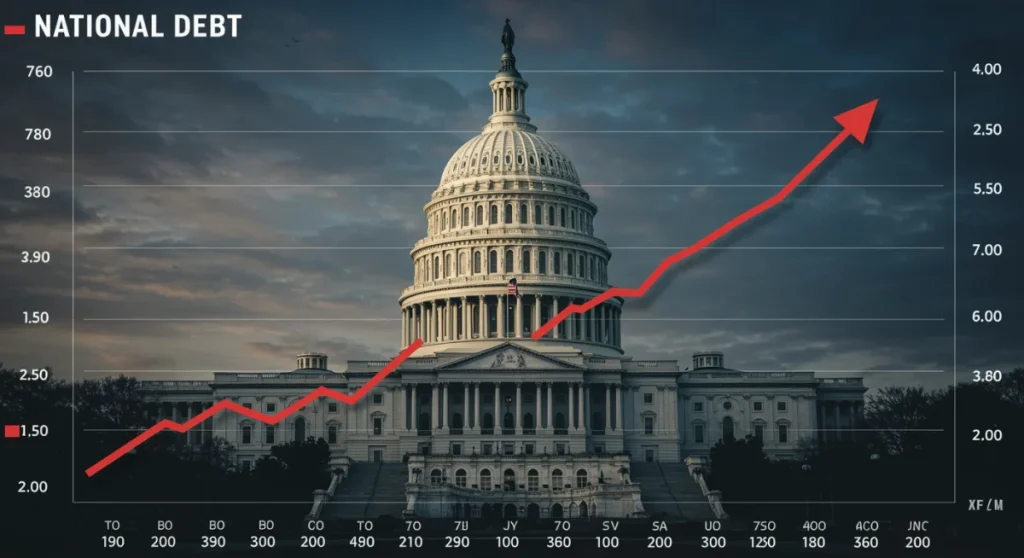
The national debt in 2026 presents a complex challenge, impacting economic growth and fiscal stability, necessitating strategic policy adjustments to ensure long-term sustainability.
The national debt in 2026 continues to be a central economic concern, requiring a comprehensive understanding of its drivers and proactive policy measures to ensure the nation’s fiscal health and economic sustainability.
Understanding the National Debt: A 2026 Perspective on Economic Sustainability is more than just a financial figure; it’s a dynamic indicator reflecting the nation’s economic health and future trajectory. As we delve into 2026, the implications of this accumulating debt become increasingly critical for every American, influencing everything from interest rates to public services.
The evolving landscape of national debt
The national debt is not a static entity; it’s a constantly evolving challenge shaped by various economic, political, and social forces. In 2026, the discussion around the national debt is particularly pertinent, as external factors and domestic policies continue to exert significant pressure on the fiscal outlook of the United States. Understanding this evolution is crucial for grasping its future implications.
Historically, national debt has served as a tool for financing wars, economic downturns, and major infrastructure projects. However, the sheer scale and persistent growth of the debt in recent decades have raised alarms among economists and policymakers alike. The trajectory we observe in 2026 is a culmination of past decisions and present realities, demanding a forward-looking approach to fiscal management.
Key drivers of debt growth
Several fundamental factors contribute to the ongoing expansion of the national debt. These are not isolated issues but rather interconnected elements that collectively create a complex fiscal environment.
Persistent budget deficits: When government spending exceeds revenue, a budget deficit occurs, adding to the national debt. This has been a recurring theme for many years, driven by various spending programs and tax policies.
Entitlement programs: Social Security and Medicare, while vital safety nets, represent significant and growing portions of federal spending. Their long-term solvency is a major concern for future debt levels.
Interest on the debt: As the national debt grows, so does the amount of interest the government must pay to its creditors. This interest payment itself becomes a substantial expenditure, potentially crowding out other essential investments.
Economic downturns and emergencies: Recessions, pandemics, and natural disasters often necessitate increased government spending for relief and stimulus, leading to spikes in debt.
The interplay of these factors creates a challenging environment for fiscal planners. Each element, in its own way, contributes to the upward trend of the national debt, making sustainable management a continuous effort.
Looking ahead to 2026, these drivers are expected to continue influencing the debt’s trajectory. Policymakers face the delicate task of balancing immediate needs with long-term fiscal responsibility, a challenge that requires careful consideration of both economic impacts and social welfare.
Economic implications of a growing national debt
A burgeoning national debt carries a multitude of economic implications that can profoundly affect individuals, businesses, and the overall prosperity of the nation. These effects are not always immediate but can manifest over time, altering the economic landscape in significant ways. Understanding these implications is crucial for appreciating the urgency of addressing the debt challenge.
The sheer size of the debt can lead to concerns about governmental solvency, potentially impacting investor confidence and the nation’s credit rating. Such concerns can translate into higher borrowing costs for the government, which in turn can lead to a cycle of increasing debt payments and further fiscal strain. This ripple effect touches various aspects of the economy.
Impact on interest rates and investment
One of the most direct economic consequences of a large national debt is its potential influence on interest rates. When the government borrows heavily, it competes with private sector borrowers for available capital, which can drive up interest rates across the economy.
Higher borrowing costs: Increased government borrowing can push up interest rates for mortgages, car loans, and business investments, making it more expensive for consumers and companies to borrow money.
Reduced private investment: Higher interest rates can discourage private investment, as businesses find it more costly to expand and innovate. This can slow down economic growth and job creation over the long term.
Crowding out effect: Government borrowing can ‘crowd out’ private investment by diverting financial resources that would otherwise be available for businesses. This can stifle productivity and innovation.
The impact on interest rates and investment is a critical aspect of debt management. A sustained period of elevated interest rates can have a compounding effect, making it even harder to reduce the national debt and stimulate economic growth. This highlights the importance of prudent fiscal policy.
Furthermore, a growing national debt can lead to inflationary pressures if the central bank monetizes the debt, which means it buys government bonds to keep interest rates low. This can devalue the currency and reduce the purchasing power of citizens, adding another layer of economic complexity.
Fiscal policy and the 2026 budget outlook
Fiscal policy, encompassing government spending and taxation, plays a pivotal role in shaping the national debt. As we look towards the 2026 budget outlook, the decisions made by policymakers today will have lasting consequences on the nation’s financial health. The balance between stimulating economic growth and ensuring fiscal responsibility is a constant tightrope walk.
The current fiscal environment is characterized by ongoing debates about tax reform, infrastructure spending, and the funding of social programs. Each of these areas represents a significant budgetary commitment that directly impacts the national debt. The 2026 budget will reflect the priorities and compromises reached in these critical policy discussions.
Challenges in budget balancing
Balancing the budget is a formidable challenge, especially when faced with competing demands and unforeseen economic events. Policymakers must navigate a complex web of interests and pressures.
Political constraints: Decisions about spending cuts or tax increases are often politically unpopular, making it difficult for elected officials to implement necessary but challenging fiscal adjustments.
Demographic shifts: An aging population leads to increased demand for social security and healthcare services, placing greater strain on federal budgets and contributing to higher debt levels.
Global economic volatility: International economic events, such as trade disputes or global recessions, can impact domestic revenues and necessitate increased government spending, further complicating budget balancing efforts.
The 2026 budget outlook is not just a projection of numbers; it’s a reflection of national values and priorities. The choices made regarding fiscal policy will determine whether the nation moves towards a more sustainable debt path or continues to accumulate liabilities that could burden future generations.
Effective fiscal policy requires a long-term vision, transcending short-term political cycles. It involves making difficult decisions that may not always be popular but are essential for ensuring the nation’s economic stability and prosperity. This forward-thinking approach is vital for addressing the national debt challenge.
The role of monetary policy and inflation
While fiscal policy manages government spending and taxation, monetary policy, primarily controlled by the Federal Reserve, influences the money supply and credit conditions. The interplay between these two policy areas is critical for understanding the overall economic environment and its impact on the national debt, especially in the context of inflation.
In 2026, the Federal Reserve’s actions on interest rates and quantitative easing will continue to have a profound effect on the cost of servicing the national debt. Low interest rates can make borrowing cheaper for the government, but they can also fuel inflation if not managed carefully. High inflation, on the other hand, can erode the value of the debt but also destabilize the economy.
Inflationary pressures and debt management
Inflation is a double-edged sword when it comes to national debt. While moderate inflation can help reduce the real value of the debt over time, high and unpredictable inflation can have detrimental effects on the economy and public trust.
The Federal Reserve’s mandate includes maintaining price stability, which means keeping inflation at a manageable level. However, various factors, including supply chain disruptions, energy price fluctuations, and strong consumer demand, can create inflationary pressures that complicate debt management strategies.
If inflation accelerates significantly, the Federal Reserve might be compelled to raise interest rates more aggressively. This action, while necessary to curb inflation, would increase the government’s borrowing costs, making it more expensive to service the national debt and potentially triggering a recession. This delicate balance is a constant concern for policymakers.
The current environment of global economic uncertainty further complicates the task of managing monetary policy. Central banks worldwide are grappling with similar challenges, and their collective actions can have spillover effects on the U.S. economy and its national debt.
Therefore, a coordinated approach between fiscal and monetary policy is essential. Fiscal policy makers must consider the potential reactions of the Federal Reserve to their spending and taxation decisions, while the Federal Reserve must be mindful of the government’s fiscal position when setting monetary policy. This synergy is vital for achieving economic sustainability.
International comparisons and global economic factors
The national debt of the United States does not exist in a vacuum; it is influenced by and influences global economic factors. Comparing the U.S. debt burden to that of other developed nations provides valuable context and insights into potential challenges and solutions. In 2026, global economic trends, trade relationships, and international capital flows will continue to play a significant role in the U.S. fiscal landscape.
Many nations grapple with their own public debt challenges, driven by similar factors such as aging populations, social welfare programs, and economic downturns. Understanding how other countries manage their debt and the outcomes of their strategies can offer valuable lessons for the United States.
Global economic interdependence
The world economy is highly interconnected, meaning that economic events in one region can have ripple effects across the globe. This interdependence has direct implications for the U.S. national debt.
Foreign ownership of U.S. debt: A significant portion of the U.S. national debt is held by foreign governments and investors. Their willingness to continue purchasing U.S. Treasury bonds is crucial for maintaining low borrowing costs.
Global interest rates: International interest rate movements can affect the attractiveness of U.S. debt to foreign investors. If global rates rise, the U.S. might need to offer higher yields to attract capital, increasing debt servicing costs.
Trade balances and currency values: A nation’s trade balance and the value of its currency can influence its ability to manage debt. A strong currency can make imports cheaper but might also reduce export competitiveness, affecting economic growth and tax revenues.
The global economic environment in 2026 is characterized by ongoing geopolitical tensions, technological advancements, and shifting trade patterns. These factors can create both opportunities and risks for the U.S. national debt. Maintaining strong international relationships and engaging in sound economic diplomacy are vital for navigating this complex landscape.
Learning from the fiscal experiences of other nations, both successes and failures, can inform U.S. policy decisions. This comparative perspective allows for a broader understanding of effective debt management strategies and the potential pitfalls to avoid in the pursuit of economic sustainability.
Strategies for long-term debt sustainability
Achieving long-term debt sustainability requires a multi-faceted approach that addresses both the revenue and expenditure sides of the government budget. There is no single magic bullet; rather, a combination of prudent fiscal policies, economic growth initiatives, and effective debt management strategies will be necessary to ensure the nation’s financial health in 2026 and beyond.
Policymakers must consider a range of options, from incremental adjustments to more significant structural reforms. The goal is not just to reduce the debt but to establish a framework that prevents its unsustainable growth in the future, fostering a stable and prosperous economic environment.
Policy levers for debt reduction
Various policy levers can be pulled to influence the national debt. These often involve difficult choices but are essential for long-term fiscal stability.
Spending reforms: Reforming entitlement programs like Social Security and Medicare, or reducing discretionary spending, can significantly impact government expenditures. These reforms often require broad political consensus.
Revenue enhancements: This could involve adjusting tax rates, closing tax loopholes, or introducing new forms of taxation. The goal is to increase government revenue without stifling economic activity.
Economic growth initiatives: Policies that promote strong and sustained economic growth can increase tax revenues naturally, helping to reduce the debt-to-GDP ratio without explicit spending cuts or tax increases. This includes investments in infrastructure, education, and research.
Debt management strategies: Actively managing the maturity structure of government debt, refinancing at lower interest rates when possible, and exploring innovative financial instruments can help reduce debt servicing costs.
Implementing these strategies requires political will, public understanding, and a willingness to make compromises. The long-term benefits of a sustainable national debt, including greater economic stability, lower interest rates, and increased fiscal flexibility, far outweigh the short-term challenges of implementing necessary reforms.
Ultimately, a sustainable national debt path is a shared responsibility, involving not only government officials but also citizens who understand the importance of fiscal prudence. Educating the public about the debt’s implications and the potential solutions is a crucial step towards building the consensus needed for effective action.
Public perception and political will
The national debt is not merely an economic issue; it is deeply intertwined with public perception and political will. The ability to implement effective debt reduction strategies often hinges on how the public understands the problem and whether political leaders are willing to make difficult, sometimes unpopular, decisions. In 2026, the narrative surrounding the national debt will continue to shape policy debates and public discourse.
Public opinion can act as both a catalyst and an impediment to fiscal reform. When citizens are well-informed about the debt’s implications, they are more likely to support measures that may require some sacrifice. Conversely, a lack of understanding or a focus on short-term benefits can hinder progress towards long-term sustainability.
Building consensus for fiscal responsibility
Building a broad consensus for fiscal responsibility is a significant challenge, given the diverse interests and priorities within a democratic society. However, it is an essential step towards addressing the national debt effectively.
Transparent communication: Government agencies and policymakers need to communicate clearly and transparently about the state of the national debt, its drivers, and its potential consequences. This helps to build public trust and understanding.
Bipartisan cooperation: Addressing the national debt requires a bipartisan effort, transcending partisan divides. Finding common ground and working across the aisle are crucial for implementing sustainable fiscal policies.
Long-term perspective: Encouraging a long-term perspective among both the public and political leaders is vital. This means focusing on the benefits for future generations rather than just immediate gains or losses.
The political will to tackle the national debt is often influenced by election cycles and the perceived urgency of the problem. In 2026, as the nation looks towards future elections, the debate around fiscal policy will likely intensify, making it even more important for leaders to prioritize sustainable solutions.
Ultimately, a robust democracy thrives on informed public discourse. By fostering a deeper understanding of the national debt and its implications, and by encouraging political leaders to act with courage and foresight, the United States can move towards a more secure and sustainable economic future.
Key Point
Brief Description
Debt Drivers
Persistent deficits, entitlement programs, and interest payments fuel national debt growth.
Economic Impact
Higher interest rates, reduced investment, and potential inflation are key concerns.
Policy Solutions
Spending reforms, revenue enhancements, and economic growth are vital for sustainability.
Global Context
Foreign ownership and global economic trends significantly influence U.S. debt.
Frequently asked questions about the national debt in 2026
What is the primary concern regarding the national debt in 2026?▼
The primary concern is the long-term sustainability of the national debt, particularly how its continued growth will impact economic stability, interest rates, and the government’s capacity to fund essential services without future generations bearing an excessive burden.
How does the national debt affect average citizens in 2026?▼
For average citizens, the national debt can lead to higher interest rates on loans, potential inflation, and reduced funding for public services if a significant portion of the budget is allocated to debt servicing. It can also impact job growth and economic opportunities.
What role does fiscal policy play in managing the national debt?▼
Fiscal policy, through government spending and taxation decisions, directly influences the national debt. Prudent fiscal management aims to balance revenues and expenditures to prevent excessive borrowing, contributing to a more sustainable debt trajectory.
Are there any international benchmarks for national debt levels?▼
While there isn’t a universally agreed-upon ‘safe’ benchmark, economists often compare a nation’s debt-to-GDP ratio to those of other developed countries. High ratios can signal fiscal vulnerability, impacting investor confidence and borrowing costs on a global scale.
What are the potential solutions for reducing the national debt?▼
Solutions include a combination of spending reforms, such as adjusting entitlement programs, increasing government revenues through tax policy changes, and implementing policies that foster robust economic growth. Bipartisan cooperation is crucial for effective implementation.
Conclusion
The journey towards Understanding the National Debt: A 2026 Perspective on Economic Sustainability reveals a multifaceted challenge that demands immediate and thoughtful action. The accumulating debt, driven by persistent deficits, entitlement spending, and interest payments, carries significant economic implications, from elevated interest rates to potential inflationary pressures. Addressing this requires a harmonious blend of fiscal and monetary policies, informed by global comparisons and executed with strong political will and public support. As we move forward, fostering a shared understanding and commitment to long-term fiscal responsibility will be paramount for securing a stable and prosperous economic future for the United States.