Medicare Part D 2026: Compare Plans, Save $500 Annually
Effectively comparing Medicare Part D plans in 2026 is crucial for beneficiaries to optimize prescription drug coverage and achieve average annual savings of $500, navigating complex options with informed decisions.
Effectively comparing Medicare Part D plans in 2026 is crucial for beneficiaries to optimize prescription drug coverage and achieve average annual savings of $500, navigating complex options with informed decisions.
Navigating healthcare costs in retirement can be complex, and prescription drug expenses often represent a significant portion of that burden. Understanding how to effectively compare and select a Medicare Part D plan in 2026 is not just about compliance; it’s about making informed choices that can lead to substantial financial relief. Many beneficiaries overlook the potential for significant savings, but with the right approach, you could save an average of $500 annually on your prescription medications. This guide will equip you with the knowledge and strategies to make that a reality, ensuring you get the most out of your Medicare benefits.
Understanding Medicare Part D in 2026: The Basics
Medicare Part D, also known as prescription drug coverage, is a vital component of Medicare that helps millions of Americans pay for their medications. As we look towards 2026, it’s essential to grasp the fundamental structure and how it’s designed to assist with drug costs. This part of Medicare is offered through private insurance companies approved by Medicare, meaning plans can vary significantly in terms of cost, covered drugs, and pharmacy networks. Being aware of these foundational elements is the first step toward making a beneficial selection.
Part D plans are generally available as stand-alone plans that add drug coverage to Original Medicare, or as part of a Medicare Advantage Plan (Part C) that includes drug coverage. The choice between these options depends heavily on your overall healthcare needs and preferences. Each year, plans can change their formularies (list of covered drugs), costs, and terms, making an annual review crucial for all beneficiaries. These annual changes can directly impact your out-of-pocket expenses for medications.
Key Components of Medicare Part D
Premiums: The monthly fee you pay to the insurance company for your Part D coverage. These vary widely by plan and region.
Deductibles: The amount you must pay for your prescriptions before your plan begins to pay. Some plans have no deductible, while others have a deductible up to the Medicare-allowed maximum.
Copayments and Coinsurance: Your share of the cost for each prescription after you’ve met your deductible. Copayments are fixed amounts, while coinsurance is a percentage of the drug’s cost.
Formulary: A list of prescription drugs covered by a plan. It’s crucial that your specific medications are on the plan’s formulary, preferably in a lower cost-sharing tier.
Understanding these core components is paramount for anyone trying to navigate the complexities of prescription drug coverage. Without a clear picture of what each term means and how it applies to your specific situation, it becomes difficult to accurately compare plans and predict your annual out-of-pocket costs. This foundational knowledge empowers you to ask the right questions and evaluate plans more critically.
The landscape of Medicare Part D is dynamic, with adjustments made annually to reflect changes in drug prices, healthcare policies, and market competition. Being proactive in learning about these changes, especially for 2026, can safeguard your financial well-being and ensure continuous access to necessary medications. It’s not just about enrolling; it’s about strategic enrollment tailored to your unique prescription needs.
The Importance of Annual Plan Comparison for 2026
Many Medicare beneficiaries make the mistake of enrolling in a Part D plan and then forgetting about it, assuming their coverage will remain optimal year after year. This passive approach can lead to significantly higher out-of-pocket costs. The reality is that prescription drug plans frequently change their formularies, pricing, and even the pharmacies in their network from one year to the next. For 2026, these changes could be particularly impactful, making an annual review not just recommended, but essential for financial prudence.
Even if your health hasn’t changed, your plan likely has. A drug that was once on a preferred tier might move to a higher-cost tier, or it might even be removed from the formulary entirely. Such shifts can dramatically alter your annual spending on medications. Therefore, actively comparing plans each year ensures that your chosen coverage continues to align with your current prescription needs and budget constraints. This proactive measure is key to maximizing your savings.
Why Your Current Plan Might Not Be Best for 2026
Formulary Changes: Plans often update their list of covered drugs. A medication you rely on might be dropped or moved to a more expensive tier.
Cost Adjustments: Premiums, deductibles, copayments, and coinsurance percentages can increase, making your current plan less affordable.
Pharmacy Network Shifts: Your preferred pharmacy might no longer be in your plan’s network, leading to higher costs or inconvenience.
New, More Suitable Plans: New plans enter the market or existing ones improve their offerings, potentially providing better coverage or lower costs for your specific drugs.
The financial implications of not comparing plans can be substantial. Forgoing an annual review could mean missing out on a plan that covers your medications at a much lower cost, or inadvertently paying more for drugs that are now on higher tiers. This vigilance is precisely what allows beneficiaries to save an average of $500 annually, turning potential losses into significant gains. It’s about being an informed consumer in a complex market.
Regular plan comparison is a cornerstone of effective Medicare management. It ensures that your healthcare dollars are spent wisely and that you maintain access to the most cost-effective prescription drug coverage available. The effort invested in this annual review is a small price to pay for the peace of mind and financial benefits it can bring.
Leveraging the Medicare Plan Finder Tool Effectively
The official Medicare Plan Finder tool is an invaluable resource for comparing Medicare Part D plans. It’s designed to simplify the complex process of evaluating numerous options, allowing beneficiaries to input their specific medications and dosages to get personalized cost estimates. For 2026, mastering this tool will be crucial for anyone serious about saving money on their prescription drugs.
Using the Plan Finder is straightforward, but requires accurate information. You’ll need to list all your prescription medications, including their dosages and frequency. The tool will then calculate estimated annual out-of-pocket costs for each available plan in your area, factoring in premiums, deductibles, and anticipated drug costs through the various coverage phases. This comprehensive overview is what makes it so powerful for comparison.
Steps to Maximize Your Plan Finder Experience
Gather All Medication Information: Before you begin, compile a list of all your current prescription drugs, including the exact name, dosage, and how often you take them. Accuracy here is critical for precise cost estimates.
Input Your Pharmacy Preferences: The tool allows you to select your preferred pharmacies. Different plans have different pharmacy networks, and costs can vary even within the same plan depending on whether you use an in-network or out-of-network pharmacy.
Review Estimated Annual Costs: Pay close attention to the estimated annual out-of-pocket costs for each plan. This figure provides a holistic view, integrating premiums, deductibles, and drug costs.
Check Plan Star Ratings: Medicare assigns star ratings to plans based on performance and quality. While cost is important, a higher-rated plan often indicates better service and member satisfaction.
The Medicare Plan Finder is updated annually, typically in October, with the new plan information for the upcoming year. This is the prime time to use the tool, as it provides the most current data for the Annual Enrollment Period (AEP). By dedicating time to thoroughly explore your options using this tool, you can uncover plans that offer significantly better value for your specific prescription needs. Many beneficiaries report substantial savings simply by using this resource effectively.
Remember, the goal is not just to find the cheapest premium, but the plan that offers the lowest overall annual cost for your unique combination of medications. A plan with a low premium might have a high deductible or higher copayments for your specific drugs, leading to greater overall expenses. The Plan Finder helps you see the bigger picture, allowing for a truly informed decision.
Comparing Formularies and Pharmacy Networks
Beyond just premiums and deductibles, two critical factors in choosing the best Medicare Part D plan for 2026 are the plan’s formulary and its pharmacy network. These elements directly impact whether your specific medications are covered and at what cost, as well as the convenience of where you can fill your prescriptions. Overlooking these details can lead to unexpected out-of-pocket expenses and logistical headaches.
A plan’s formulary is its list of covered drugs. It’s organized into tiers, with different tiers having different cost-sharing amounts. Generic drugs are typically in lower tiers with lower copayments, while specialty or brand-name drugs may be in higher tiers with higher copayments or coinsurance. It’s vital to ensure that all your current medications are on the formulary, and ideally, in preferred tiers.
Key Considerations for Formularies and Networks
Check Your Specific Drugs: Confirm that every medication you take is listed on the plan’s formulary. Also, note which tier each drug falls into, as this directly affects your copayments.
Review Coverage Restrictions: Some plans may have quantity limits, step therapy requirements (trying a cheaper drug first), or prior authorization rules for certain medications. Understand these restrictions before enrolling.
Verify Your Preferred Pharmacies: Ensure that your local and preferred pharmacies are part of the plan’s network. Using an out-of-network pharmacy can result in significantly higher costs or no coverage at all.
Consider Mail-Order Options: Many plans offer mail-order pharmacy services, which can sometimes provide cost savings or increased convenience for maintenance medications. Check if this is an option and if it benefits you.
The interplay between formularies and pharmacy networks is complex. A plan might cover your drugs, but if your preferred pharmacy isn’t in-network, you could face higher costs or the inconvenience of switching pharmacies. Conversely, a plan with a great network might not cover all your essential medications. Balancing these two factors is crucial for optimal coverage and cost efficiency.
By meticulously comparing formularies and pharmacy networks, you can avoid surprises and ensure that your chosen plan truly meets your needs. This detailed review is where many beneficiaries find significant savings, often exceeding the average $500 annually, by aligning their plan with their actual medication and convenience requirements.
Navigating the Coverage Gap (Donut Hole) in 2026
One of the most confusing aspects of Medicare Part D for many beneficiaries is the coverage gap, often referred to as the “donut hole.” While reforms have significantly reduced its impact, understanding how it works in 2026 is still crucial for managing your prescription drug costs throughout the year. Being prepared for this phase can prevent unexpected financial strain.
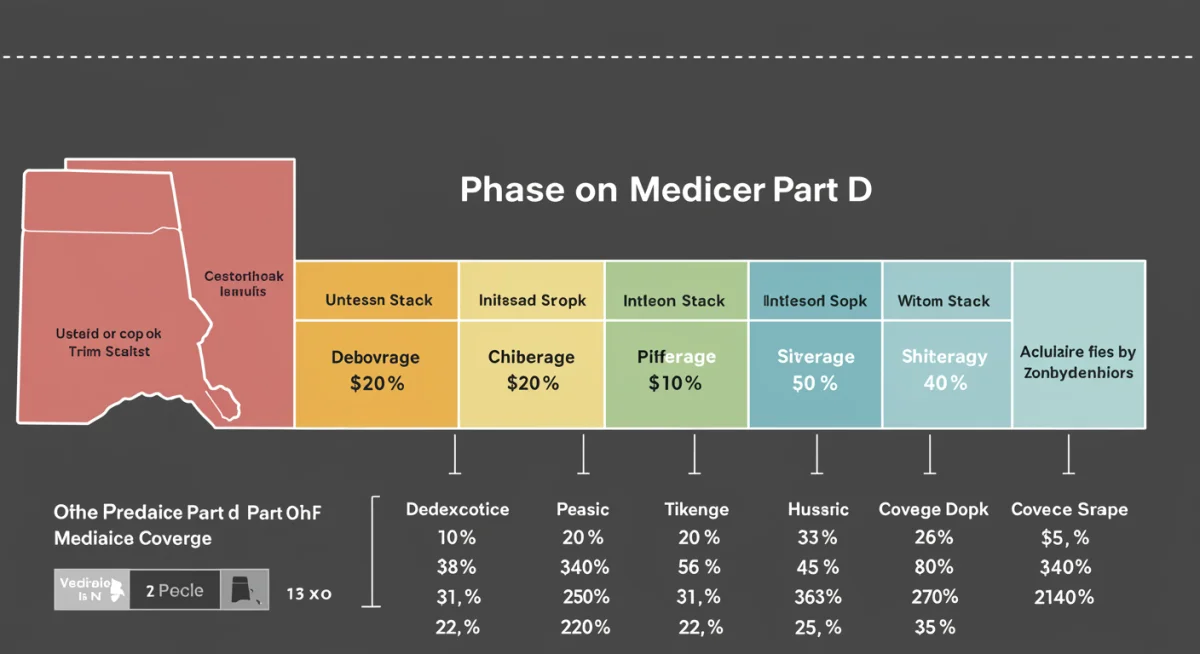
In 2026, once you and your plan have spent a certain amount on covered drugs (the total amount includes what you’ve paid and what your plan has paid), you will enter the coverage gap. During this phase, you will generally pay 25% of the cost for both brand-name and generic drugs. This 25% cost-sharing continues until your out-of-pocket spending reaches a specific threshold for catastrophic coverage. This structure is designed to provide some relief compared to past years, but it still represents a period of increased costs for many.
Strategies to Manage the Coverage Gap
Choose a Plan with Good Gap Coverage: Some Part D plans offer additional coverage in the donut hole for certain drugs, often for generics. While not required by Medicare, these plans can provide significant relief.
Utilize Manufacturer Programs: If you take expensive brand-name drugs, check if the manufacturer offers patient assistance programs or coupons that can help reduce your costs, especially during the coverage gap.
Consider Generic Alternatives: Discuss with your doctor if generic versions of your brand-name medications are available and appropriate for you. Generics are typically much cheaper and can help you stay out of or get through the coverage gap faster.
Track Your Spending: Keep an eye on your Explanation of Benefits (EOB) statements from your plan to track how much you and your plan have spent. This helps you anticipate when you might enter and exit the coverage gap.
The coverage gap can be a source of anxiety, but with careful planning and an understanding of its mechanics for 2026, it can be navigated effectively. The goal is to minimize your time and expenses within this phase by selecting a plan that offers the best overall value, considering your specific medication profile. This proactive approach contributes significantly to the average annual savings of $500 or more.
While the donut hole has been largely closed for brand-name drugs in terms of the beneficiary’s percentage of cost, understanding the thresholds and how your spending accumulates towards catastrophic coverage remains vital. Being informed allows you to make strategic choices that mitigate the financial impact of this phase.
Extra Help: Reducing Your Part D Costs
For many Medicare beneficiaries, the costs associated with Medicare Part D, including premiums, deductibles, and copayments, can still be a significant financial burden. Recognizing this, the federal government offers a program called “Extra Help” (also known as the Low-Income Subsidy, or LIS) to assist those with limited income and resources. Understanding eligibility and how to apply for Extra Help in 2026 can unlock substantial savings, often making prescription drugs much more affordable.
Extra Help can significantly reduce or even eliminate your Part D premiums and deductibles, and lower your copayments for covered prescriptions. The level of assistance you receive depends on your income and assets. This program is a lifesaver for many, ensuring access to necessary medications without compromising other essential expenses. It’s a critical component of ensuring that Medicare Savings Programs is accessible to all eligible individuals.
Eligibility and Application for Extra Help
Income Limits: Your income must be below a certain threshold, which is adjusted annually. For 2026, these limits will be published closer to the enrollment period.
Resource Limits: Your financial resources (savings, investments, real estate other than your primary residence) must also be below a specific limit.
Automatic Eligibility: If you receive Medicaid, Supplemental Security Income (SSI), or help from your state to pay your Medicare premiums (a Medicare Savings Program), you generally qualify for Extra Help automatically.
How to Apply: You can apply for Extra Help online through the Social Security Administration’s website, by calling Social Security, or by visiting a local Social Security office. The application process is typically straightforward and requires documentation of your income and resources.
Even if you think you might not qualify, it’s always worth applying for Extra Help. The income and resource limits are more generous than many people realize, and receiving this assistance can make a dramatic difference in your annual healthcare costs. It’s a key strategy for many beneficiaries to achieve savings far exceeding the average $500 annually.
The savings from Extra Help are not just about reducing monthly premiums; they also extend to lowering your out-of-pocket costs for prescriptions throughout the year, including during the coverage gap. This comprehensive support ensures that financial constraints do not become a barrier to accessing vital medications. Don’t leave these potential savings on the table.
Actionable Steps for Comparing and Enrolling in 2026
Now that you understand the intricacies of Medicare Part D, the importance of annual comparison, the utility of the Plan Finder, and the benefits of Extra Help, it’s time to put that knowledge into action for 2026. The Annual Enrollment Period (AEP), which typically runs from October 15th to December 7th each year, is your window to make changes to your Part D coverage. Making an informed decision during this time is crucial for optimizing your savings.
The process may seem daunting, but by breaking it down into manageable steps, you can confidently navigate your options and select a plan that best fits your needs and budget. Remember, the goal is to find a plan that provides comprehensive coverage for your specific medications at the lowest possible overall annual cost. This proactive approach is what enables beneficiaries to save an average of $500 or more per year.
Your Checklist for 2026 Medicare Part D Enrollment
Review Your Annual Notice of Change (ANOC): Your current plan will send you this document in September. It details all the changes to your plan for the upcoming year, including formulary adjustments, cost changes, and network updates. Read it carefully.
Gather Your Medication List: Compile an up-to-date list of all your prescription drugs, including dosage and frequency. This is essential for accurate comparison using the Medicare Plan Finder.
Utilize the Medicare Plan Finder: Visit Medicare.gov during the AEP. Enter your medications, pharmacies, and any other relevant information to compare plans side-by-side. Pay attention to estimated annual costs.
Consider All Factors: Don’t just look at premiums. Evaluate deductibles, copayments, coinsurance, formulary coverage for your specific drugs, any restrictions, and the plan’s pharmacy network.
Check for Extra Help Eligibility: If you have limited income and resources, apply for Extra Help through the Social Security Administration. This can significantly reduce your Part D costs.
Enroll or Re-enroll Thoughtfully: Once you’ve identified the best plan, enroll during the AEP. If you don’t make a change, you’ll generally be re-enrolled in your current plan, which might not be the most cost-effective option for 2026.
Taking these actionable steps will empower you to make a well-informed decision about your Medicare Part D coverage for 2026. It’s an annual exercise that directly translates into tangible savings and peace of mind, knowing that your prescription drug needs are covered efficiently and affordably. Don’t underestimate the power of a careful review; it could save you hundreds of dollars.
The commitment to reviewing your Medicare Part D options annually is an investment in your financial health. With the right tools and a clear strategy, navigating the choices for 2026 becomes a manageable task, leading to optimal coverage and significant savings on your essential medications.
Key Aspect
Brief Description
Annual Review
Crucial for validating continued coverage and cost-effectiveness due to yearly plan changes.
Medicare Plan Finder
Official online tool for personalized plan comparison based on your specific medications.
Formulary & Network
Ensure your drugs are covered and your preferred pharmacies are in-network for cost savings.
Extra Help (LIS)
Government program for low-income beneficiaries to reduce Part D costs significantly.
Frequently Asked Questions About Medicare Part D in 2026
What is the Annual Enrollment Period for Medicare Part D in 2026?▼
The Annual Enrollment Period (AEP) for Medicare Part D typically runs from October 15th to December 7th each year. During this time, beneficiaries can enroll, switch, or drop Part D plans, with changes taking effect on January 1st of the following year, including for 2026.
How can I save money on my prescription drugs with Medicare Part D in 2026?▼
To save money, compare plans annually using the Medicare Plan Finder, verify your medications are on the plan’s formulary at a low tier, check if your preferred pharmacies are in-network, and explore eligibility for Extra Help if you have limited income and resources.
What is the “donut hole” in Medicare Part D for 2026?▼
The “donut hole,” or coverage gap, is a phase in Part D where you pay 25% of the cost for both brand-name and generic drugs after you and your plan have spent a certain amount. This continues until you reach the catastrophic coverage threshold for 2026.
Are all my prescription drugs covered by every Medicare Part D plan?▼
No, coverage varies significantly by plan. Each Part D plan has a formulary (list of covered drugs) and different tiers for cost-sharing. It’s essential to check if your specific medications are on a plan’s formulary and their respective cost tiers before enrolling.
What should I do if my current Part D plan changes for 2026?▼
You should carefully review your Annual Notice of Change (ANOC) letter from your plan. Then, use the Medicare Plan Finder tool during the AEP (Oct 15 – Dec 7) to compare your current plan’s new offerings against other available plans to ensure you retain the best coverage for your needs.
Conclusion
Navigating Medicare Part D in 2026, while seemingly intricate, presents a significant opportunity for beneficiaries to optimize their prescription drug coverage and achieve substantial annual savings. The key lies in proactive engagement: understanding the fundamental components of Part D, diligently comparing plans each year using resources like the Medicare Plan Finder, and meticulously reviewing formularies and pharmacy networks. Furthermore, exploring eligibility for programs like Extra Help can provide a crucial safety net for those with limited income. By adopting these strategies, you can confidently select a plan that not only meets your medical needs but also safeguards your financial well-being, potentially saving you an average of $500 or more annually. Making an informed decision during the Annual Enrollment Period is not just a recommendation; it’s a strategic move towards more affordable and efficient healthcare.