Food Banks and Emergency Assistance 2026: Local Support
As economic landscapes evolve, understanding how to access local food banks and emergency assistance in 2026 is vital for many. This guide provides comprehensive information on finding crucial support and resources during challenging times.
Understanding how to access local food banks and emergency assistance in 2026 is paramount for individuals and families navigating economic uncertainties, ensuring essential needs are met through community resources.
In an ever-evolving economic landscape, knowing where to turn for help is more important than ever. For many, accessing food banks and emergency assistance 2026 will be a critical step in maintaining stability. This comprehensive guide aims to demystify the process, connecting you with vital resources and support systems available in your community.
The evolving role of food banks in 2026
Food banks have long served as pillars of support in communities, offering crucial aid to those facing food insecurity. In 2026, their role has expanded significantly, adapting to new economic realities and increased demand. These organizations are no longer just places for emergency food relief; they are becoming comprehensive hubs for various forms of assistance.
The economic shifts witnessed in recent years, including inflation, job market fluctuations, and changing social safety nets, have placed immense pressure on families. Food banks have responded by diversifying their services, often collaborating with other non-profits and government agencies to provide a more holistic approach to support. This integrated model aims to address not just immediate hunger but also underlying issues contributing to food insecurity.
Beyond basic sustenance: integrated services
Many food banks now offer more than just food parcels. They recognize that hunger is often intertwined with other socio-economic challenges. As such, you might find a range of additional support services available, making them invaluable community resources.
Nutrition education workshops
Access to benefits enrollment assistance (e.g., SNAP)
Referrals for housing and utility aid
Workforce development programs
These expanded services reflect a deeper understanding of the complex needs of individuals and families struggling with economic hardship. By providing a wider array of resources under one roof, food banks are striving to empower individuals towards greater self-sufficiency, ensuring long-term stability rather than just short-term relief.
The commitment of food banks to evolve with community needs is a testament to their dedication. They are continuously seeking innovative ways to serve, often leveraging technology for better distribution and outreach. Understanding these expanded roles can help individuals and families utilize the full spectrum of support available to them.
Finding local food assistance programs
Locating food assistance programs in your immediate area is the first step toward getting help. With numerous organizations operating at local, regional, and national levels, navigating the options can seem daunting. However, several reliable methods can simplify this search, ensuring you connect with the right resources efficiently.
The digital age has made information more accessible, and many food banks and assistance programs maintain online presences. Utilizing search engines, dedicated resource platforms, and even social media can quickly point you to nearby sources of support. It is crucial to verify the information and contact organizations directly to confirm their services, hours, and eligibility requirements.
Online search strategies for food banks
When searching online, specific keywords can yield the most relevant results. Combining your location with terms like ‘food bank,’ ‘food pantry,’ ‘meal program,’ or ‘hunger relief’ will help narrow down your search. Many national organizations also offer searchable databases.
Feeding America’s network locator
Local government social services websites
United Way’s 211 service (phone and online)
Community-specific Facebook groups and forums
These platforms provide comprehensive lists, contact details, and often, maps to help you find the closest and most appropriate food assistance. Always check for updated hours and any specific intake processes before visiting, as these can change frequently.
Beyond online searches, word-of-mouth and community centers remain powerful tools. Local churches, schools, and community organizations often have direct knowledge of food distribution points or can provide personal referrals. Don’t hesitate to reach out to trusted community leaders or social workers for guidance.
Understanding eligibility and application processes in 2026
While food banks and emergency assistance programs are designed to help those in need, they often have specific eligibility criteria and application processes. These requirements ensure that resources are distributed fairly and reach those who are most vulnerable. Understanding these procedures beforehand can significantly streamline your access to support.
Eligibility typically revolves around income levels, household size, and residency. Many programs align with federal poverty guidelines, but some may have additional criteria. It’s important to remember that even if you believe you don’t meet strict income cutoffs, certain circumstances, such as recent job loss or unexpected medical expenses, might qualify you for assistance.
Common eligibility requirements
Most food assistance programs require some form of documentation to verify your situation. Being prepared with these documents can expedite the application process. While requirements can vary, some common items are frequently requested.
Proof of residency (utility bill, lease agreement)
Identification for all household members (driver’s license, state ID, birth certificates)
Proof of income (pay stubs, unemployment benefits statements, social security statements)
Documentation of expenses (rent, mortgage, medical bills)
It’s always advisable to contact the specific food bank or assistance program directly to confirm their exact requirements. Many organizations have compassionate staff who can guide you through the process, answer questions, and even help you gather the necessary paperwork. Don’t be discouraged if the initial process seems complex; help is available.
The application process itself might involve filling out a short form, a brief interview, or sometimes, a simple registration. The aim is to understand your needs and ensure you receive the most appropriate support. Transparency and honesty during this process are key to building trust and accessing the aid you require.
Emergency assistance beyond food
Economic challenges often extend beyond food insecurity, impacting housing, utilities, and medical care. Fortunately, a network of emergency assistance programs exists to address these broader needs. These programs are vital in preventing further hardship and providing a safety net during critical times.
Understanding the different types of emergency assistance available can help you identify holistic solutions for your situation. These programs are often administered by local government agencies, non-profit organizations, and community groups, each with specific focuses and eligibility criteria. Proactive research and outreach are essential to discovering what support you might qualify for.
Types of emergency support available
When facing a crisis, immediate access to various forms of assistance can make a significant difference. From keeping the lights on to maintaining a stable home, these programs offer crucial relief.
Housing assistance: Rent and mortgage assistance, eviction prevention, homeless shelters.
Utility assistance: Programs like LIHEAP (Low Income Home Energy Assistance Program), water bill aid, and disconnection prevention.
Medical assistance: Free clinics, prescription drug programs, and emergency medical funds.
Childcare support: Subsidies and vouchers for eligible families to ensure children’s care.
Each of these categories often has sub-programs designed to address specific needs. For example, housing assistance might include short-term rental aid or long-term affordable housing initiatives. It’s important to inquire about all available options when contacting assistance providers.
Connecting with a social worker or case manager can be incredibly beneficial. These professionals can assess your overall situation, help you navigate complex application processes, and refer you to multiple programs simultaneously, ensuring a coordinated approach to your emergency needs.
Navigating economic shifts: long-term strategies
While emergency assistance provides immediate relief, developing long-term strategies is crucial for sustained stability in the face of ongoing economic shifts. These strategies focus on building resilience, fostering financial literacy, and connecting individuals with resources that promote self-sufficiency. The goal is to move beyond crisis management towards proactive planning.
Economic shifts can be unpredictable, making it imperative for individuals and families to equip themselves with tools and knowledge that enhance their financial well-being. This includes understanding personal finance, exploring educational opportunities, and leveraging community programs designed for growth and development. It’s about empowering individuals to navigate challenges effectively.
Building financial resilience and independence
Many organizations offer programs aimed at helping individuals strengthen their financial footing. These initiatives go beyond handouts, providing education and mentorship to create lasting change.
Access to affordable banking and credit counseling
Entrepreneurship support for small business development
These resources are often available through community colleges, non-profit organizations, and local government initiatives. Investing time in these programs can yield significant long-term benefits, reducing reliance on emergency aid and fostering greater financial independence. It’s a proactive approach to economic stability.
Furthermore, advocating for policies that support economic equity and stability is a collective long-term strategy. Engaging with local government and community leaders can help shape programs and initiatives that create a more robust safety net for everyone, reducing the impact of future economic downturns on vulnerable populations.
Community support and volunteer opportunities
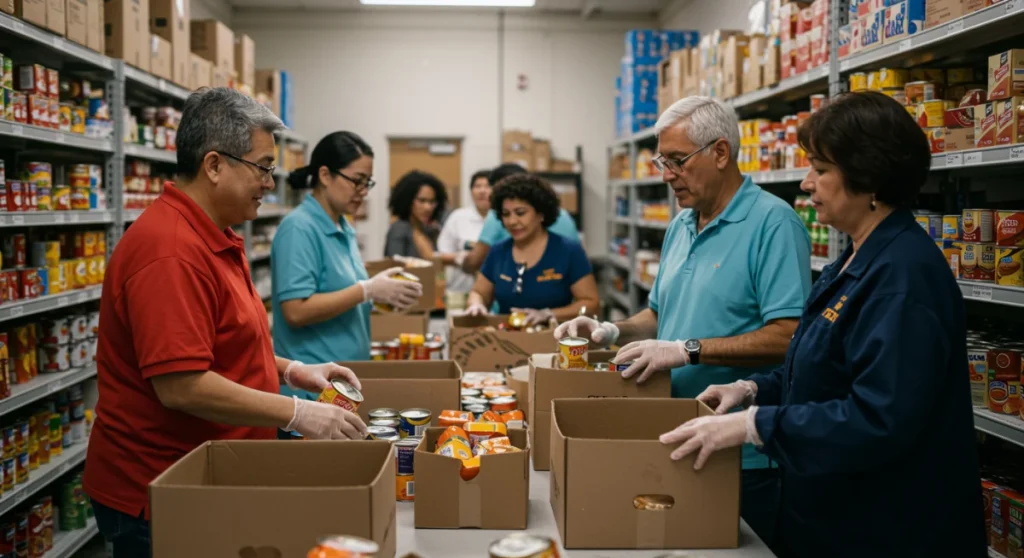
The effectiveness of food banks and emergency assistance programs relies heavily on community support and the dedication of volunteers. These vital contributions ensure that resources reach those in need, strengthening the fabric of local communities. Getting involved, whether through donations or volunteering, is a powerful way to make a difference.
Community support extends beyond financial contributions. It encompasses the donation of time, skills, and resources, creating a collaborative environment where everyone can contribute. This collective effort not only provides tangible aid but also fosters a sense of solidarity and mutual assistance, which is essential during challenging economic times.
How to contribute and get involved
There are numerous ways individuals and groups can support food banks and emergency assistance efforts. Every contribution, no matter how small, plays a role in sustaining these crucial services.
Donating food: Focus on non-perishable, nutrient-dense items. Check local food bank websites for their most needed items.
Financial contributions: Monetary donations allow organizations flexibility to purchase specific items, cover operational costs, and adapt to changing needs.
Volunteering time: Assisting with food sorting, distribution, administration, or special events.
Advocacy: Raising awareness about food insecurity and supporting policies that strengthen social safety nets.
Many food banks also welcome corporate partnerships, school drives, and community events to collect donations and raise awareness. Contacting your local food bank directly is the best way to learn about their specific needs and how you can best contribute your time or resources.
Volunteering offers a unique opportunity to see the direct impact of your efforts and connect with your community. It provides valuable experience and a sense of purpose, reinforcing the idea that collective action can indeed create positive change in the face of economic challenges.
Key Point
Brief Description
Evolving Food Bank Role
Food banks in 2026 offer expanded services beyond food, including education and referrals for holistic support.
Finding Local Assistance
Utilize online search tools, national networks, and community resources to locate nearby food and emergency aid.
Eligibility & Process
Understand income, residency, and documentation requirements to streamline access to support programs.
Beyond Food Aid
Emergency assistance includes housing, utility, medical, and childcare support for broader needs.
Frequently asked questions about food banks and emergency assistance
What documents do I need to access a food bank in 2026?▼
While requirements vary, generally you’ll need proof of residency (utility bill), identification for household members, and sometimes proof of income or a brief self-declaration of need. It’s best to check with your specific local food bank beforehand for their exact requirements.
Are food banks only for people below the poverty line?▼
Not necessarily. While many programs prioritize low-income individuals, eligibility often considers recent job loss, unexpected medical expenses, or other crises. If you are experiencing food insecurity, you should still reach out to a local food bank to discuss your situation.
What kind of emergency assistance is available besides food?▼
Emergency assistance can cover housing aid (rent/mortgage), utility assistance (energy/water bills), medical support (free clinics, prescription programs), and childcare subsidies. Many organizations offer referrals to help you find comprehensive support tailored to your needs.
How can I find a local food bank or assistance program?▼
You can use online search engines with keywords like ‘food bank near me,’ check national networks like Feeding America, or dial 211 for United Way’s referral service. Local community centers, churches, and schools are also great resources for information.
How can I help support food banks and emergency assistance efforts?▼
You can support by donating non-perishable food items, making financial contributions, or volunteering your time to help with sorting and distribution. Advocacy for policies that strengthen social safety nets also plays a crucial role in long-term support.
Conclusion
The landscape of food banks and emergency assistance 2026 reflects a vital and adaptable network designed to support communities through economic shifts. From providing essential nutrition to offering comprehensive aid for housing, utilities, and financial literacy, these organizations are more than just providers of temporary relief; they are cornerstones of community resilience. Understanding how to access these resources, appreciating the eligibility processes, and recognizing the opportunities to contribute are all crucial elements in fostering a supportive society. As economic conditions continue to evolve, the collective effort of individuals, volunteers, and dedicated programs ensures that help remains accessible, empowering those in need to navigate challenges and build a more stable future.