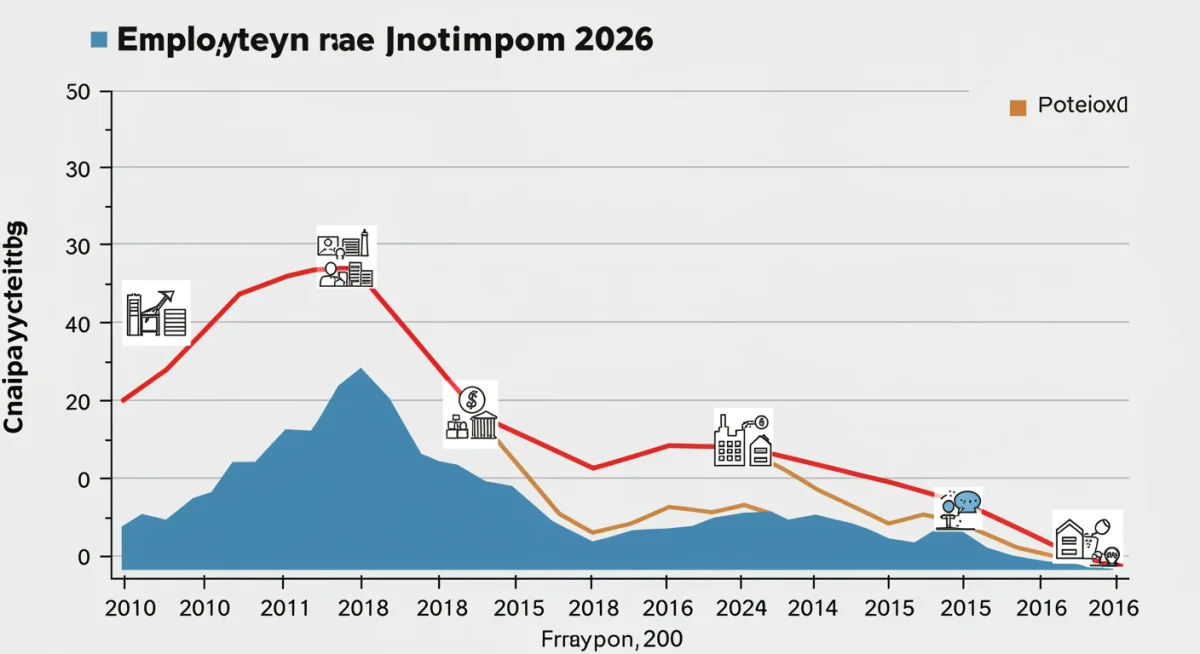
Labor Market 2026: Unemployment & Sector Trends in the US
The US labor market in 2026 is characterized by dynamic shifts, with unemployment rates influenced by technological advancements and evolving sector-specific demands, necessitating adaptable workforce strategies.
The US labor market in 2026 is characterized by dynamic shifts, with unemployment rates influenced by technological advancements and evolving sector-specific demands, necessitating adaptable workforce strategies.
Understanding the labor market in 2026: a look at the current unemployment rate and sector-specific trends is crucial for individuals, businesses, and policymakers alike. The landscape of work is continuously evolving, shaped by a confluence of technological innovation, demographic shifts, and global economic forces. This article delves into the key dynamics defining the American workforce today and projects how these trends will likely manifest in the near future.
The evolving unemployment rate: a snapshot of 2026
The unemployment rate serves as a vital indicator of the health of an economy, reflecting the percentage of the labor force that is actively seeking employment but unable to find it. In 2026, the United States is navigating a complex economic environment where the overall unemployment rate is a composite of various underlying factors, including post-pandemic recovery, inflation control measures, and structural changes in industries. While specific figures fluctuate, a general trend toward stabilization, albeit with regional and demographic disparities, is observable.
Analyzing the unemployment rate requires a nuanced perspective, moving beyond the headline numbers to understand who is most affected and why. Economic models project that while the overall rate may remain relatively low, certain segments of the population or specific geographic areas could experience higher rates due to mismatches between available skills and job requirements, or due to industry-specific downturns. The Federal Reserve’s monetary policies, aimed at balancing inflation and employment, play a significant role in shaping these outcomes, often creating a delicate equilibrium that impacts job creation and retention.
Dissecting the national unemployment figures
Demographic breakdowns: Unemployment rates often vary significantly across age groups, educational attainment levels, and racial/ethnic backgrounds, highlighting persistent inequalities.
Geographic disparities: Certain states or metropolitan areas might exhibit higher or lower unemployment due to local industry concentrations or economic vitality.
Long-term unemployment: The duration of unemployment is a critical factor, as prolonged joblessness can lead to skill erosion and reduced employability.
Understanding these breakdowns is essential for crafting targeted policies that address the root causes of unemployment, rather than just focusing on aggregate numbers. The labor market’s resilience is tested by its ability to absorb shocks and adapt to new demands, and the unemployment rate is a thermometer for this adaptability. In conclusion, the 2026 unemployment rate, while potentially stable overall, demands scrutiny into its constituent parts to reveal the true state of the American workforce.
Technological disruption and its impact on employment
Technological advancements, particularly in artificial intelligence (AI), automation, and robotics, continue to be a primary driver of change within the US labor market 2026. These innovations are not merely creating new jobs but are fundamentally reshaping existing ones, demanding new skill sets and altering traditional career paths. While some fear widespread job displacement, the more common outcome is job transformation, where human workers collaborate with intelligent systems, taking on roles that require creativity, critical thinking, and complex problem-solving.
The integration of AI into workflows, for example, is enhancing productivity in sectors like manufacturing, finance, and customer service. This often means that repetitive or data-intensive tasks are increasingly automated, freeing up human employees to focus on strategic initiatives and customer engagement. However, this also necessitates significant investment in upskilling and reskilling programs to ensure the workforce can meet these new demands. The challenge lies in managing this transition equitably, ensuring that those whose jobs are most affected by automation have access to the training and support needed to secure new opportunities.
Emerging technologies and job creation
AI and data science: Surge in demand for AI specialists, machine learning engineers, and data analysts across all industries.
Robotics and automation: Creation of roles in robotics maintenance, integration, and oversight, particularly in manufacturing and logistics.
Cybersecurity: Growing need for cybersecurity experts to protect increasingly digitized infrastructure and data.
The transformative power of technology extends beyond specific job roles; it influences how work is organized, the tools used, and the very nature of employment contracts. Remote work, augmented by digital collaboration tools, has become a more permanent fixture for many, offering flexibility but also posing challenges for team cohesion and company culture. The ability of the labor market to adapt to these technological shifts will be critical for sustained economic growth and individual prosperity. Ultimately, technological disruption in 2026 is a double-edged sword, presenting both challenges and unprecedented opportunities for a skilled and adaptable workforce.
Sector-specific trends: growth and decline in key industries
Examining the US labor market 2026 reveals a mosaic of sector-specific trends, with some industries experiencing robust growth and talent shortages, while others face structural declines or significant restructuring. This divergence underscores the importance of understanding the underlying forces driving demand and innovation within each sector. The healthcare and technology sectors, for instance, continue to be powerhouses of job creation, fueled by an aging population and relentless digital transformation, respectively.
Conversely, sectors like traditional retail and certain manufacturing segments might continue to grapple with automation, global competition, and changing consumer behaviors, leading to job consolidation or shifts in the types of roles available. The energy sector is also undergoing a significant transformation, with a growing emphasis on renewable energy sources creating new jobs in green technologies, while traditional fossil fuel industries adapt to evolving environmental policies and market demands. These shifts require a strategic approach to workforce planning, both at the national and local levels.
Thriving sectors in 2026
Healthcare and social assistance: Driven by an aging demographic and advancements in medical science, creating demand for nurses, therapists, and home health aides.
Information technology: Continuous innovation in software development, cloud computing, and AI fuels demand for skilled tech professionals.
Renewable energy: Significant investment in solar, wind, and other green technologies generates new jobs in installation, maintenance, and research.
The construction sector also shows promise, particularly in infrastructure projects and residential building, contributing to job growth. Education, especially in vocational and specialized training, is another area expected to see sustained demand as the need for upskilling and reskilling becomes paramount. Understanding these sector-specific trajectories is vital for individuals making career choices and for educators designing curricula that align with future labor market needs. In conclusion, the diverse performance of various sectors highlights the dynamic nature of the 2026 labor market, requiring adaptability and foresight.
The gig economy and flexible work arrangements
The proliferation of the gig economy and flexible work arrangements continues to profoundly influence the US labor market 2026, offering both opportunities and challenges for workers and employers. This model of employment, characterized by short-term contracts or freelance work, has grown significantly, driven by digital platforms that connect workers with tasks and projects. For many, it provides unprecedented flexibility, allowing individuals to set their own hours and choose their assignments, which can be particularly appealing for those seeking supplementary income or a more autonomous career path.
However, the gig economy also raises critical questions about worker benefits, job security, and the traditional employer-employee relationship. Gig workers often lack access to health insurance, retirement plans, and other protections typically afforded to full-time employees. Policymakers are grappling with how to regulate this evolving landscape to ensure fair treatment and adequate safety nets for gig workers, without stifling the innovation and flexibility that define this model. Companies, in turn, are exploring hybrid models that combine the benefits of both traditional and flexible work.
Advantages and disadvantages of gig work
Pros: Flexibility, autonomy, diverse work opportunities, lower overhead for businesses.
Cons: Lack of benefits, income instability, limited career progression, challenges in unionization.
The shift towards more flexible work is also evident in the widespread adoption of remote and hybrid work models, accelerated by recent global events. These arrangements offer employees greater work-life balance and provide companies access to a broader talent pool, unconstrained by geographic location. However, they also necessitate new strategies for employee engagement, collaboration, and performance management. The future of work in 2026 will undoubtedly feature a blend of traditional full-time roles, expanded gig opportunities, and diverse flexible arrangements, all contributing to a more adaptable, albeit more complex, labor market. Ultimately, the gig economy is a permanent feature, requiring thoughtful integration into broader labor policies.
Skills gap and workforce development initiatives
A persistent and growing challenge within the US labor market 2026 is the skills gap, where the skills possessed by job seekers do not align with the needs of employers. This mismatch is particularly pronounced in high-growth sectors such as technology, healthcare, and advanced manufacturing, where rapid innovation constantly redefines job requirements. Addressing this gap is critical for maintaining economic competitiveness and ensuring that individuals have the opportunities to secure meaningful employment. This necessitates robust and continuous workforce development initiatives.
Both public and private sectors are investing in programs designed to bridge this gap, ranging from vocational training and apprenticeships to online certifications and university partnerships. The emphasis is on lifelong learning, recognizing that a static skill set is no longer sufficient in a dynamic job market. Companies are increasingly offering internal training and development programs to upskill their existing workforce, recognizing that investing in human capital is crucial for future success. Furthermore, educational institutions are adapting their curricula to better prepare students for the demands of emerging industries, focusing on critical thinking, digital literacy, and adaptability.
Key strategies for bridging the skills gap
Apprenticeship programs: Combining on-the-job training with classroom instruction, particularly effective in skilled trades and technical fields.
Online learning platforms: Providing accessible and flexible options for individuals to acquire new skills and certifications.
Public-private partnerships: Collaborations between government, industry, and educational institutions to develop targeted training programs.
The effectiveness of these initiatives hinges on their ability to anticipate future skill demands and to quickly adapt to new technological and economic realities. Moreover, fostering a culture of continuous learning is essential, encouraging individuals to take ownership of their professional development. The skills gap is not merely a problem of insufficient talent but a challenge of ensuring that the talent pipeline is agile and responsive to market needs. In conclusion, proactive workforce development is indispensable for a thriving and adaptable 2026 labor market.
Policy implications and future outlook for the US labor market
The complex dynamics of the US labor market 2026 necessitate thoughtful policy responses to ensure equitable growth, stability, and adaptability. Government policies play a crucial role in shaping the environment for job creation, worker protection, and economic opportunity. This includes fiscal and monetary policies aimed at macroeconomic stability, as well as targeted interventions in areas like education, infrastructure, and social safety nets. The goal is to create a robust framework that supports both businesses and workers in navigating periods of change.
One key area of policy focus is the investment in infrastructure, which not only creates immediate jobs but also lays the groundwork for long-term economic productivity and competitiveness. Policies related to immigration also have a significant impact on labor supply and demand, particularly in sectors facing labor shortages. Furthermore, the debate around minimum wage, universal basic income, and comprehensive worker benefits continues to evolve as the nature of work changes, aiming to ensure a living wage and adequate support for all workers, especially those in the gig economy or in roles vulnerable to automation.
Crucial policy considerations for the future
Investment in green infrastructure: Creating jobs in renewable energy and sustainable development, aligning with climate goals.
Reforming education and training systems: Ensuring curricula are aligned with future job market demands and promoting lifelong learning.
Modernizing labor laws: Adapting regulations to address the rise of the gig economy and flexible work arrangements, ensuring worker protections.
Looking ahead, the future outlook for the US labor market in 2026 is one of continuous transformation. It will be characterized by a growing demand for specialized skills, increased flexibility in work arrangements, and the ongoing integration of advanced technologies. Success will depend on the collective ability of individuals, businesses, and government to embrace change, invest in human capital, and foster an environment that encourages innovation and resilience. Proactive and adaptive policymaking will be essential to harness the opportunities and mitigate the challenges presented by this evolving landscape. Ultimately, the future of the labor market will be defined by how effectively these challenges are met through collaborative efforts and forward-thinking strategies.
Key Trend
Brief Description
Unemployment Rate Stability
Overall stability expected, but with demographic and regional disparities requiring detailed analysis.
Technological Integration
AI and automation transforming job roles, demanding new skills and fostering human-AI collaboration.
Sectoral Divergence
Healthcare, Tech, and Green Energy booming, while others adapt to automation and market shifts.
Flexible Work Expansion
Gig economy and remote work models continue to grow, impacting worker benefits and regulatory frameworks.
Frequently asked questions about the 2026 US labor market
What is the projected unemployment rate for 2026 in the US?▼
While precise figures are subject to change, projections suggest a relatively stable unemployment rate in 2026, possibly maintaining a low single-digit percentage. This stability will be influenced by ongoing economic recovery, inflation management, and structural adjustments within various industries across the nation.
Which sectors are expected to grow most in 2026?▼
Key growth sectors in 2026 include healthcare and social assistance, driven by an aging population; information technology, fueled by AI and cloud computing; and renewable energy, due to significant investments in green technologies. These sectors will likely continue to be major sources of job creation.
How will AI and automation impact job availability?▼
AI and automation are primarily expected to transform, rather than eliminate, many jobs. Repetitive tasks will be automated, increasing demand for roles requiring creativity, critical thinking, and complex problem-solving. This shift emphasizes the need for continuous upskilling and reskilling initiatives for the workforce.
What are the main challenges for gig workers in 2026?▼
Gig workers in 2026 will continue to face challenges related to job security, access to comprehensive benefits like health insurance and retirement plans, and income stability. Policymakers are actively exploring new regulations to address these issues and provide better protections for this growing segment of the workforce.
What role do workforce development programs play in 2026?▼
Workforce development programs are crucial in 2026 for bridging the skills gap between job seekers and employer needs. They offer vital training, apprenticeships, and online certifications to equip individuals with the skills demanded by evolving industries, fostering a culture of lifelong learning and adaptability.
Conclusion
The US labor market 2026 stands at a pivotal juncture, characterized by dynamic shifts influenced by technological innovation, evolving sector demands, and changing work paradigms. While the overall unemployment rate may show signs of stability, a deeper dive reveals significant disparities and transformations across industries and demographics. The continued rise of AI and automation is reshaping job roles, necessitating a strategic focus on workforce development and lifelong learning. Furthermore, the expansion of the gig economy and flexible work arrangements presents both opportunities for autonomy and challenges related to worker protections. Navigating these complexities requires agile policy responses, robust educational initiatives, and a collective commitment to fostering an adaptable and resilient workforce capable of thriving in the face of continuous change. The future of work in America will be defined by how effectively these challenges are addressed to ensure equitable and sustainable economic growth for all.