Federal Reserve’s 2026 Interest Rate Projections Explained
The Federal Reserve's 2026 interest rate projections are pivotal for understanding the future economic landscape, influencing everything from inflation to investment strategies and borrowing costs.
The Federal Reserve’s 2026 interest rate projections are pivotal for understanding the future economic landscape, influencing everything from inflation to investment strategies and borrowing costs.
As we navigate the complexities of the global economy, understanding the future direction of monetary policy is paramount. This article delves into the anticipated Federal Reserve’s Interest Rate Adjustments: A Deep Dive into the 2026 Projections and Market Reactions, offering crucial insights into what lies ahead for consumers, businesses, and investors in the United States.
Understanding the Federal Reserve’s Mandate and Tools
The Federal Reserve, often referred to as the Fed, serves as the central banking system of the United States. Its primary mandate involves maintaining maximum employment, stable prices, and moderate long-term interest rates. These dual objectives—maximum employment and price stability—are crucial to fostering a healthy and vibrant economy. The Fed achieves these goals through a variety of monetary policy tools, with interest rate adjustments being one of the most prominent and impactful. The decisions made by the Federal Open Market Committee (FOMC), the Fed’s principal monetary policy-making body, reverberate throughout financial markets and directly affect the daily lives of Americans.
Historically, the Fed has utilized several key tools to influence the economy. The federal funds rate, which is the target rate for interbank lending, stands as its primary lever. By adjusting this rate, the Fed influences borrowing costs for banks, which in turn affects interest rates on everything from mortgages to credit cards. Understanding how these tools are deployed is essential for interpreting the Fed’s future actions and their implications.
Key Monetary Policy Tools
Federal Funds Rate: The benchmark interest rate that influences all other rates in the economy.
Quantitative Easing/Tightening: Large-scale asset purchases or sales to influence long-term interest rates and money supply.
Reserve Requirements: The amount of funds banks must hold in reserve against deposits.
Discount Rate: The interest rate at which commercial banks can borrow directly from the Federal Reserve.
The Fed’s communication strategies also play a vital role. Forward guidance and the release of economic projections, like the dot plot, provide transparency and help shape market expectations. This transparency is intended to reduce uncertainty and enhance the effectiveness of monetary policy. The intricate dance between these tools and communication forms the bedrock of the Fed’s influence on the U.S. economy.
The Current Economic Climate and Its Influence on 2026 Projections
The current economic landscape is a complex tapestry woven from various threads: inflation, employment figures, global supply chain dynamics, and geopolitical events. These factors collectively inform the Federal Reserve’s assessment of the economy’s health and its future trajectory. Decisions regarding interest rates are not made in a vacuum; they are a direct response to prevailing economic conditions and anticipated shifts. Analyzing these conditions provides a crucial backdrop for understanding the 2026 projections.
Recent inflation trends have been a significant concern, pushing the Fed to adopt more hawkish stances in the past. While inflation may moderate, its persistence or resurgence would undoubtedly influence future policy. Similarly, the labor market’s strength, characterized by unemployment rates and wage growth, is a key determinant. A robust job market could give the Fed more leeway to maintain higher rates if inflation remains sticky, whereas a weakening market might prompt a more accommodative stance. Global economic headwinds, including slowing growth in major economies and ongoing geopolitical tensions, can also exert pressure on the U.S. economy, necessitating careful consideration by policymakers.
Factors Shaping the Economic Outlook
Inflationary Pressures: Core inflation metrics, consumer price index (CPI), and producer price index (PPI) trends.
Labor Market Health: Unemployment rates, job growth, wage increases, and labor force participation.
Global Economic Growth: Performance of major trading partners and international financial stability.
Geopolitical Events: Conflicts, trade disputes, and other international incidents impacting supply chains and energy prices.
Consumer spending and business investment also offer critical insights. Strong consumer demand can fuel inflation, while cautious business spending might signal an impending slowdown. The interplay of these domestic and international factors creates a dynamic environment that the Fed must constantly monitor and respond to. The projections for 2026 are thus a reflection of the Fed’s best guess at how these variables will evolve over the coming years, and how monetary policy will need to adapt accordingly to achieve its dual mandate.
Dissecting the 2026 Federal Funds Rate Projections
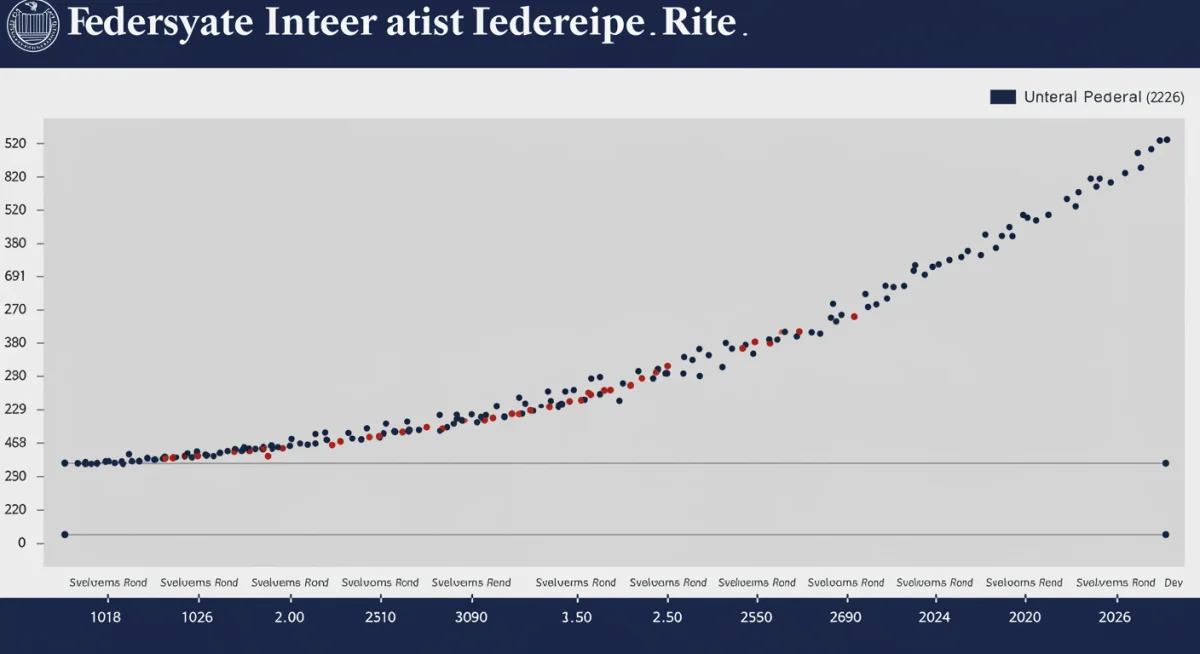
The Federal Reserve’s 2026 federal funds rate projections are a focal point for economists and investors alike, offering a glimpse into the anticipated path of monetary policy. These projections are typically summarized in the FOMC’s ‘dot plot,’ which illustrates individual committee members’ expectations for the appropriate level of the federal funds rate at various points in the future. While not a commitment, the dot plot provides valuable insight into the collective thinking of policymakers and helps to manage market expectations. Analyzing these dots requires understanding the underlying assumptions and potential shifts in economic conditions that could alter these forecasts.
The 2026 projections are likely to reflect a balance between achieving price stability and supporting economic growth. Should inflation continue its downward trend towards the Fed’s 2% target, we might see a more gradual approach to rate adjustments, potentially involving a series of modest cuts to avoid overtightening. Conversely, if inflationary pressures prove more persistent or re-emerge due to unforeseen circumstances, the Fed might be compelled to maintain higher rates for longer or even implement further increases. These projections are inherently fluid and subject to change based on incoming economic data.
Potential Scenarios for 2026 Rates
Several scenarios could unfold by 2026, each with distinct implications for interest rates. A ‘soft landing’ scenario, where inflation returns to target without a significant economic downturn, would likely involve gradual rate reductions. In contrast, a ‘recessionary’ scenario, marked by a sharp economic contraction, would almost certainly lead to more aggressive rate cuts to stimulate growth. An ‘inflationary resurgence’ scenario, however, would force the Fed to maintain or even raise rates, prioritizing price stability over immediate economic expansion. The diversity of opinions within the FOMC, as reflected in the dot plot, highlights the inherent uncertainty in long-term economic forecasting.
The Fed’s projections are also influenced by its assessment of the neutral interest rate – the theoretical rate that neither stimulates nor slows economic growth. If the neutral rate is perceived to be higher, the terminal rate for this cycle might also be higher, impacting the 2026 outlook. Ultimately, the 2026 projections represent a dynamic forecast, continuously re-evaluated as new economic data becomes available and the global economic landscape evolves. Investors and businesses should view these projections as a guide, rather than a definitive roadmap, for future monetary policy.
Market Reactions and Investor Strategies for 2026
The Federal Reserve’s interest rate projections for 2026 are not merely academic exercises; they profoundly impact financial markets and dictate investor strategies. Market participants, including stock traders, bond investors, and currency speculators, meticulously analyze every statement and projection from the Fed. The anticipation of future rate adjustments can trigger significant shifts in asset prices, influencing everything from equity valuations to the attractiveness of fixed-income instruments. Understanding these potential reactions is crucial for positioning portfolios effectively.
In the bond market, higher interest rate expectations typically lead to lower bond prices, as newly issued bonds offer more attractive yields. Conversely, expectations of rate cuts tend to boost bond prices. For equities, the impact is more nuanced. Higher rates can increase borrowing costs for companies, potentially compressing profit margins and making future earnings less valuable when discounted back to the present. Growth stocks, which rely heavily on future earnings, are often more sensitive to changes in interest rates than value stocks. The dollar’s strength is also closely tied to interest rate differentials; higher U.S. rates relative to other major economies can attract capital, strengthening the dollar.
Key Market Segments Affected
Bond Market: Yields and prices respond inversely to rate expectations.
Currency Market: Dollar strength often correlates with higher U.S. interest rates.
Commodities: Can be influenced by dollar strength and global economic growth prospects.
Investors often adjust their strategies in anticipation of Fed moves. This might involve reallocating capital from riskier assets to safer havens like short-term Treasury bills if rate hikes are expected, or increasing exposure to equities and longer-duration bonds if rate cuts are on the horizon. Diversification and a long-term perspective remain fundamental, but understanding the potential market reactions to the Fed’s 2026 outlook allows for more informed decision-making. The volatility that can accompany shifts in monetary policy underscores the importance of a robust and adaptable investment strategy.
Impact on Consumers and Businesses by 2026
The Federal Reserve’s interest rate adjustments for 2026 will extend their influence far beyond financial markets, directly affecting the everyday financial realities of consumers and the operational dynamics of businesses across the United States. Changes in the federal funds rate ripple through the economy, altering the cost of borrowing, the attractiveness of saving, and the overall economic environment. Preparing for these potential impacts is essential for both households and corporations.
For consumers, the most immediate impact will be on borrowing costs. Mortgage rates, auto loans, and credit card interest rates are all closely tied to the Fed’s benchmark rate. If rates remain elevated or continue to rise into 2026, new borrowing will become more expensive, potentially dampening demand for large purchases like homes and cars. Conversely, if the Fed begins to cut rates, borrowing costs will decrease, stimulating consumer spending and investment. Savings accounts and certificates of deposit (CDs) will also see their yields adjust, affecting the returns on personal savings. Higher rates can be beneficial for savers, while lower rates might encourage spending over saving.
Consumer and Business Financial Implications
Mortgages and Loans: Direct impact on interest rates for home, auto, and personal loans.
Savings and Investments: Affects yields on savings accounts, CDs, and bond returns.
Business Investment: Influences the cost of capital for expansion, hiring, and research and development.
Consumer Spending: Higher borrowing costs can reduce discretionary spending, while lower costs can stimulate it.
Businesses will also feel the effects keenly. Companies rely on borrowing for expansion, inventory management, and day-to-day operations. Higher interest rates increase the cost of capital, potentially leading to reduced investment, slower hiring, or even layoffs. Small businesses, often more sensitive to financing costs, could face particular challenges. Lower rates, on the other hand, can incentivize investment and growth, fostering a more dynamic business environment. The Fed’s policy choices for 2026 will thus play a significant role in shaping economic activity, employment levels, and the overall prosperity of American households and enterprises.
Historical Context and Future Policy Trajectories
To fully grasp the significance of the Federal Reserve’s 2026 interest rate projections, it’s vital to place them within a historical context. The Fed’s monetary policy has evolved significantly over decades, responding to various economic challenges, from the inflationary spirals of the 1970s to the global financial crisis of 2008 and the recent pandemic-induced disruptions. Understanding past policy responses provides valuable lessons and helps to anticipate future trajectories. The Fed’s approach is never static; it adapts to the prevailing economic theories and the unique circumstances of each era.
In recent history, the Fed has often utilized aggressive measures, such as near-zero interest rates and quantitative easing, to combat recessions and stimulate growth. The subsequent period saw a gradual tightening cycle to address rising inflation. The 2026 outlook will be shaped by how effectively these past policies have achieved their goals and the lessons learned from their implementation. Policymakers continuously refine their models and strategies, aiming for a more effective and less disruptive path to economic stability. This ongoing learning process means that future policy trajectories might not simply repeat past patterns but could incorporate new insights and tools.
Lessons from Past Monetary Cycles
Inflation Targeting: The emphasis on controlling inflation has become a cornerstone of modern monetary policy.
Forward Guidance: Increased transparency in communicating policy intentions to manage market expectations.
Balance Sheet Tools: Greater reliance on quantitative easing and tightening in extreme economic conditions.
Data Dependency: Policy decisions are increasingly driven by real-time economic data rather than pre-set paths.
Looking ahead to 2026, the Fed’s policy trajectory will likely be characterized by continued data dependency and a readiness to adjust course as economic conditions evolve. There’s a growing recognition of the importance of financial stability, meaning the Fed will likely consider the broader implications of its actions on asset bubbles and systemic risks. Furthermore, discussions around the long-term neutral rate of interest and the potential for structural changes in the economy, such as technological advancements and demographic shifts, will also inform the Fed’s approach. These elements collectively suggest a future policy landscape that is both informed by history and adaptable to emerging challenges.
Navigating Uncertainty: Preparing for 2026 and Beyond
Even with the Federal Reserve’s projections, the future remains inherently uncertain. Economic forecasting is an inexact science, and unforeseen events can quickly alter the best-laid plans. Geopolitical tensions, technological disruptions, and unexpected shifts in consumer behavior are just a few examples of factors that could derail current expectations for 2026 and beyond. Therefore, a proactive and flexible approach is essential for individuals and businesses alike to navigate the evolving economic landscape effectively.
For individuals, this means reviewing personal financial strategies. Assessing debt levels, particularly variable-rate loans, and considering refinancing options if rates are expected to rise can safeguard against increased costs. Building an emergency fund remains a cornerstone of financial resilience, providing a buffer against unexpected economic shocks. Diversifying investment portfolios and consulting with financial advisors can help align strategies with potential market shifts. The key is to avoid complacency and to regularly reassess financial health in light of changing economic indicators and Fed communications.
Strategies for Resilience
Financial Planning: Regular review of budgets, debt, and savings to adapt to interest rate changes.
Investment Diversification: Spreading investments across different asset classes to mitigate risk.
Business Contingency Planning: Developing strategies to manage increased borrowing costs or reduced demand.
Stay Informed: Continuously monitor economic news and Federal Reserve announcements.
Businesses, too, must engage in robust contingency planning. This includes stress-testing financial models against different interest rate scenarios, exploring alternative financing options, and optimizing operational efficiencies to absorb potential cost increases. Managing inventory, controlling expenses, and fostering strong customer relationships can provide a competitive edge in a challenging economic climate. Furthermore, staying attuned to the Fed’s communications and broader economic trends will enable businesses to make timely decisions, ensuring their long-term viability and growth. Navigating the uncertainties leading up to and beyond 2026 requires vigilance, adaptability, and a commitment to informed decision-making.
Key Aspect
Brief Description
Fed Mandate
Maximum employment and price stability (2% inflation target).
2026 Projections
FOMC dot plot provides insights into future federal funds rate expectations.
Market Impact
Influences bond yields, equity valuations, and currency strength.
Consumer & Business
Affects borrowing costs, savings returns, and investment decisions.
Frequently Asked Questions About Federal Reserve Interest Rates
What is the Federal Reserve’s primary goal with interest rates?▼
The Federal Reserve’s primary goal with interest rate adjustments is to achieve its dual mandate: maximum employment and price stability. By influencing borrowing costs, the Fed aims to keep inflation in check while supporting a robust job market and sustainable economic growth. This balance is crucial for overall economic health.
How do changes in the federal funds rate affect everyday Americans?▼
Changes in the federal funds rate directly impact the interest rates on various loans, such as mortgages, auto loans, and credit cards. Higher rates make borrowing more expensive, potentially slowing spending. Conversely, lower rates reduce borrowing costs, encouraging consumer spending and business investment, affecting savings yields as well.
What is the ‘dot plot’ and why is it important for 2026 projections?▼
The ‘dot plot’ is a visual representation of individual FOMC members’ projections for the federal funds rate at various future points, including 2026. It’s important because it offers insight into the collective sentiment and anticipated trajectory of monetary policy, helping markets and the public understand potential future rate adjustments.
How might inflation influence the Fed’s interest rate decisions for 2026?▼
Inflation is a critical factor. If inflation remains elevated or rises unexpectedly, the Fed might need to maintain higher interest rates or even increase them to cool the economy and bring prices back to its 2% target. Conversely, sustained low inflation could allow for rate cuts to stimulate economic activity.
What strategies can investors employ given uncertain 2026 interest rate outlooks?▼
Given the uncertain 2026 outlook, investors should consider diversifying portfolios across various asset classes to mitigate risk. Regularly reviewing investment strategies, focusing on long-term goals, and consulting with financial advisors can help in making informed decisions. Staying updated on economic data and Fed communications is also crucial.
Conclusion
The Federal Reserve’s interest rate adjustments for 2026 represent a critical juncture for the U.S. economy, impacting everything from the cost of living for consumers to the strategic investments of businesses and the performance of financial markets. While projections offer a valuable roadmap, the dynamic nature of economic forces necessitates a flexible and informed approach. Both individuals and institutions must remain vigilant, adapting their financial strategies to navigate the evolving landscape shaped by the Fed’s ongoing commitment to price stability and maximum employment.